


Say goodbye to repetitive prototyping! See how FerroTec uses simulation to solve TEC design challenges
In traditional product development processes, designers often face a real challenge: how to design aesthetically pleasing and practical products within limited time, budget, and resources? In the past, this typically involved a cyclical process of "prototype → testing → design revision → re-prototyping." While intuitive, this approach is costly and time-consuming, especially for products with complex structures or high performance requirements, where repeated prototyping is often impractical and time-consuming. This situation is now changing. More and more companies are introducing simulation technology to move the trial-and-error process forward into a virtual environment, achieving "calculation before manufacturing." FerroTec, following this trend, utilizes multiphysics simulations of thermal, fluid, and structural fields to accurately predict TEC product performance in the early design stages, significantly shortening development cycles, reducing trial-and-error costs, and comprehensively improving R&D efficiency and product reliability.
I. What is simulation technology?
Simply put, simulation uses software to model real-world physical processes: How is heat transferred? How does airflow occur? Will materials deform under stress?… By creating digital models, engineers can preview a product's performance in actual use on a computer. It's like having a virtual laboratory: no need for mold making, circuit building, or waiting for parts; just input parameters to quickly assess the feasibility of a design.
For example, if a car designer wants to optimize a car's drag, in the past they would have to conduct wind tunnel experiments, with a single model costing tens of thousands of yuan. Now, they can simply adjust the lines in software and monitor airflow changes in real time. Similarly, home appliance engineers can use simulation technology to model the heat dissipation performance of air conditioners in high-temperature and high-humidity environments, identifying overheating risks in advance. These tests, which previously required significant manpower and financial investment, can now be completed efficiently through simulation technology—this is the transformative power of simulation technology.
II. Application of Simulation Technology in TEC Product Design
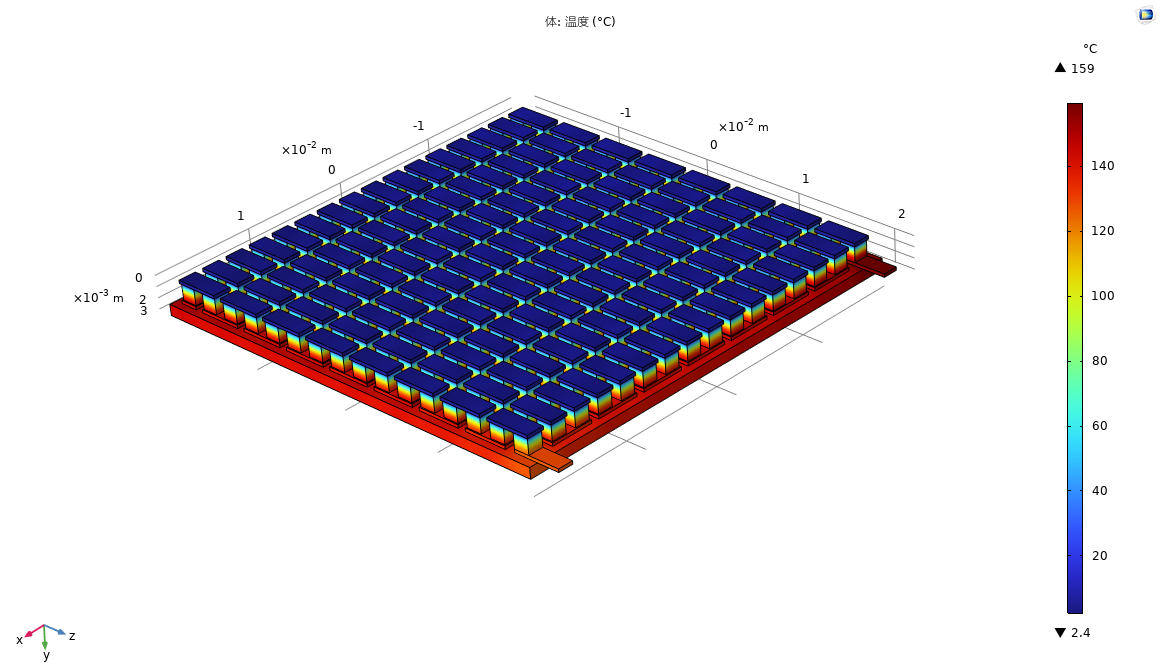
If the design of ordinary products is complex enough, then the design of TEC modules is even more challenging—it is a typical multi-physics coupling problem, where heat, electricity, fluid, and structure interact with each other, making it a case of "a change in one part affects the whole." An efficient TEC cooling solution requires the coordinated optimization of several key aspects: the number and layout of cooling chips, fan selection and airflow design, the spacing and height of heat sink fins, the distribution and pressure drop of water-cooled plates, and the control of the thermal resistance of interface materials, etc.
In the past, these designs relied heavily on engineers' experience and intuition. The result was often that each modification required a new prototype. This was not only costly but also made it difficult to achieve optimal overall performance.
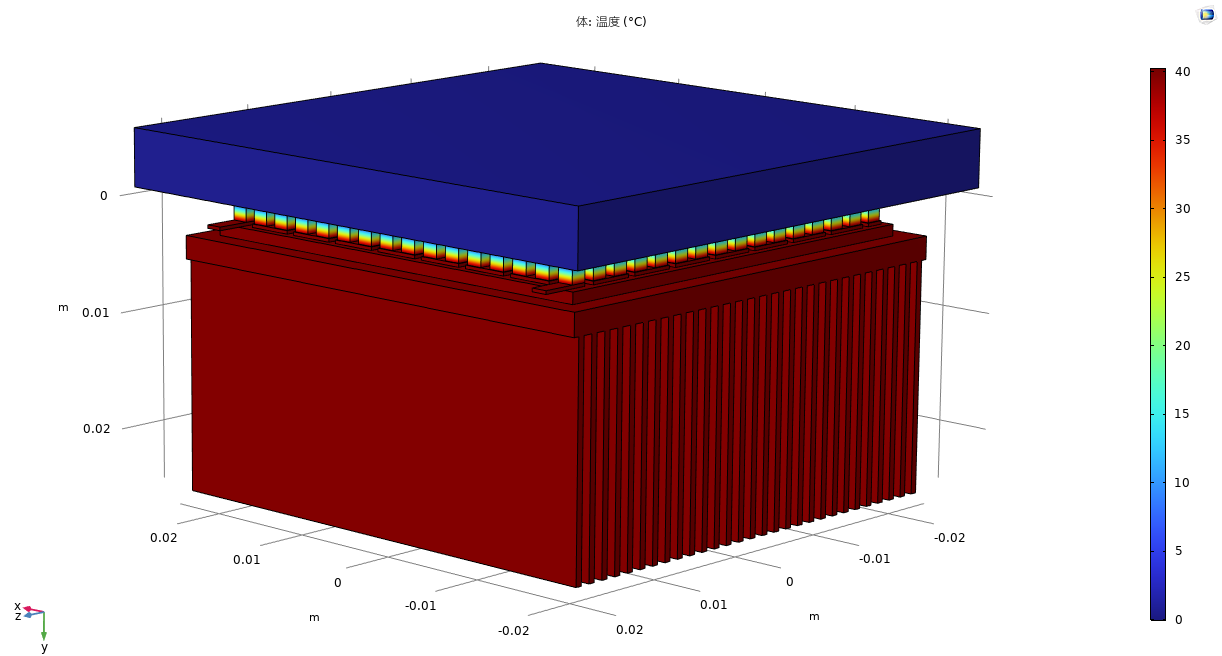
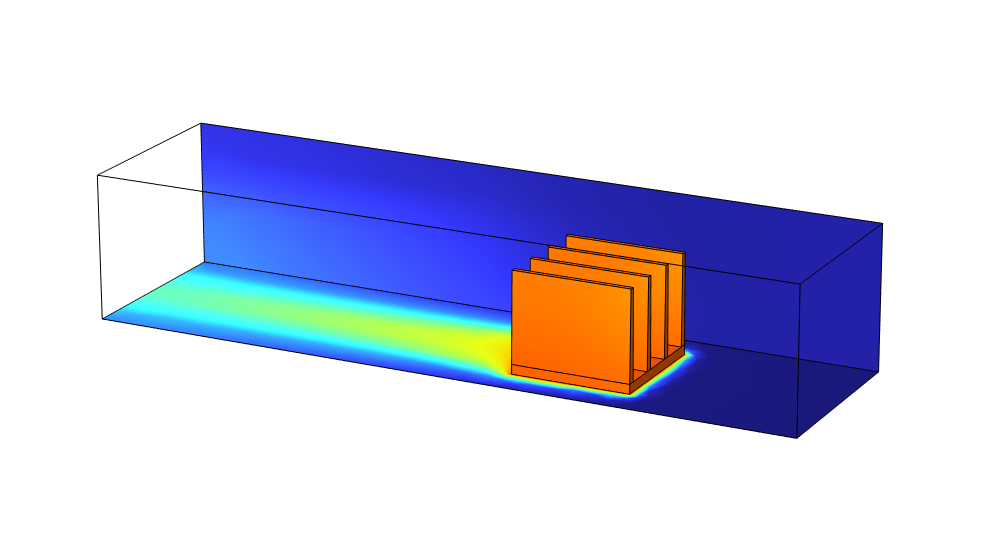
The FerroTec R&D team fully applied simulation technology to the design of TEC modules, using tools such as thermal simulation, fluid dynamics (CFD), and structural mechanics simulation to conduct virtual verification in the early stages of TEC design.
☑️ Thermal simulation: Analyze the temperature field distribution and identify local hot spots;
☑️Fluid simulation: Evaluate the flow uniformity of air ducts or water channels and optimize heat dissipation efficiency;
☑️Structural simulation: Check material strength to prevent cracking or deformation caused by thermal expansion and contraction.
In the past, we had to wait until prototypes were completed to discover problems; now, problems can be predicted and risks eliminated in the early design stages. This not only improves design efficiency but also significantly reduces the risk and time cost of later modifications. However, simulation technology is not a panacea. Its accuracy is highly dependent on the model's precision, material parameters, and boundary condition settings. If the input data is inaccurate, the results will deviate from reality. Therefore, FerroTec combines simulation technology with physical testing, using a virtual-real collaborative verification process to ensure the reliability of the final TEC product.
As a leading global supplier in the semiconductor refrigeration industry, FerroTec provides high-performance thermoelectric cooler for various precision temperature control applications. Power, materials, and appearance can all be customized. For product details or to obtain solutions, please contact us at 0571-89712612.