


From "blowing" to "cooling": VR heat dissipation has entered the era of thermoelectric cooling!
In recent years, the VR/AR industry has reached new heights: headsets are becoming increasingly lightweight, displays are becoming increasingly high-definition, and chip performance is constantly improving… However, no matter how the hardware is upgraded, one old problem remains unresolved—overheating. Most VR users are well aware that wearing a headset for extended periods can cause cheek heat, forehead sweating, frame drops, and even stuttering. The root cause is that the internal heat dissipation capacity cannot keep up with the performance improvements. Today, we will discuss the topic of "VR heat dissipation" and explore the application potential of thermoelectric cooling technology in this industry.
Why do VR headsets tend to overheat?
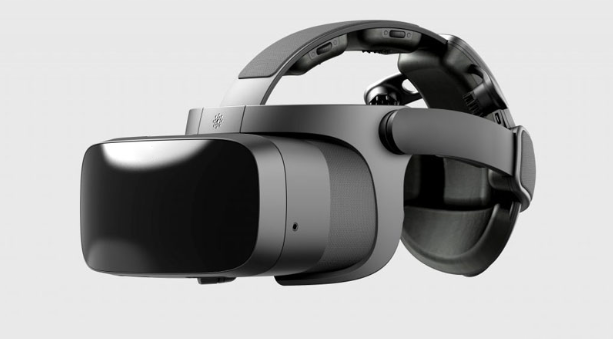
VR headsets seem simple in structure—two displays, a high-performance processor, and various sensors are all integrated into a single headset shell. However, a problem arises—the headset contains a high-performance chip and a high-brightness screen, both of which generate heat when in use. Furthermore, when worn, it fits tightly against the face, leaving almost no space for heat dissipation. This causes localized temperatures to rise rapidly, resulting in discomfort and potentially causing the device to automatically reduce its clock speed, leading to stuttering or buffering.
Mainstream Heat Dissipation Methods for VR Headsets
☑️Passive cooling: Suitable for basic scenarios
- Silicon carbide composite lens: The micro projection module adopts a multi-layer structure lens of SiO₂ / TiO₂ / ITO, which can not only effectively reduce the temperature (reducing the projector temperature from 54.3°C to 29.1°C), but also ensure a light transmittance of more than 90%, ensuring that the picture remains clear and bright.
- Graphene coating: A layer of graphene material is coated on the surface of the heat sink, which greatly improves the heat radiation capacity (thermal emissivity of over 90%), reduces heat accumulation, and promotes heat dissipation.
- Optimized heat dissipation structure: Heat generated by the chip is quickly dissipated through heat pipes and a vapor chamber and evenly distributed across the entire head-mounted display frame to prevent localized overheating or frequency throttling.
While this type of heat dissipation method is energy-saving and quiet, it can only provide passive cooling and cannot meet the heat dissipation requirements of high-performance VR headsets.
☑️Active cooling: To meet high-performance requirements
- Air-cooled system: A miniature fan is installed inside the VR headset to directly blow away the heat generated by the chip. This heat dissipation method is simple in structure, low in cost, and can effectively reduce thermal resistance. It is almost silent and vibration-free during operation and is currently the most commonly used active cooling solution for mainstream VR devices.
- Liquid Cooling System: A sophisticated liquid cooling system is built inside the VR glasses, using nanofluids to control chip temperature fluctuations within ±0.1℃. However, this heat dissipation method has significant drawbacks: the liquid piping structure is complex and costly, increasing the weight of the device and posing a potential risk of leakage. Currently, it is mostly used in experimental or professional-grade equipment and has not yet been widely adopted in the consumer market.
☑️Emerging method: Thermoelectric refrigeration
In recent years, thermoelectric cooling (TEC) technology has gradually become a new option for VR heat dissipation. It utilizes the Peltier effect to actively lower the chip temperature below the ambient temperature—no longer simply "blowing away heat," but achieving true "cooling." With its advantages of fast response, precise temperature control (up to ±0.1℃), small size, and quiet operation, it is increasingly widely used in mid-to-high-end VR devices, especially suitable for scenarios with high requirements for comfort and stability.
Application of Thermoelectric Cooling Technology in VR Glasses
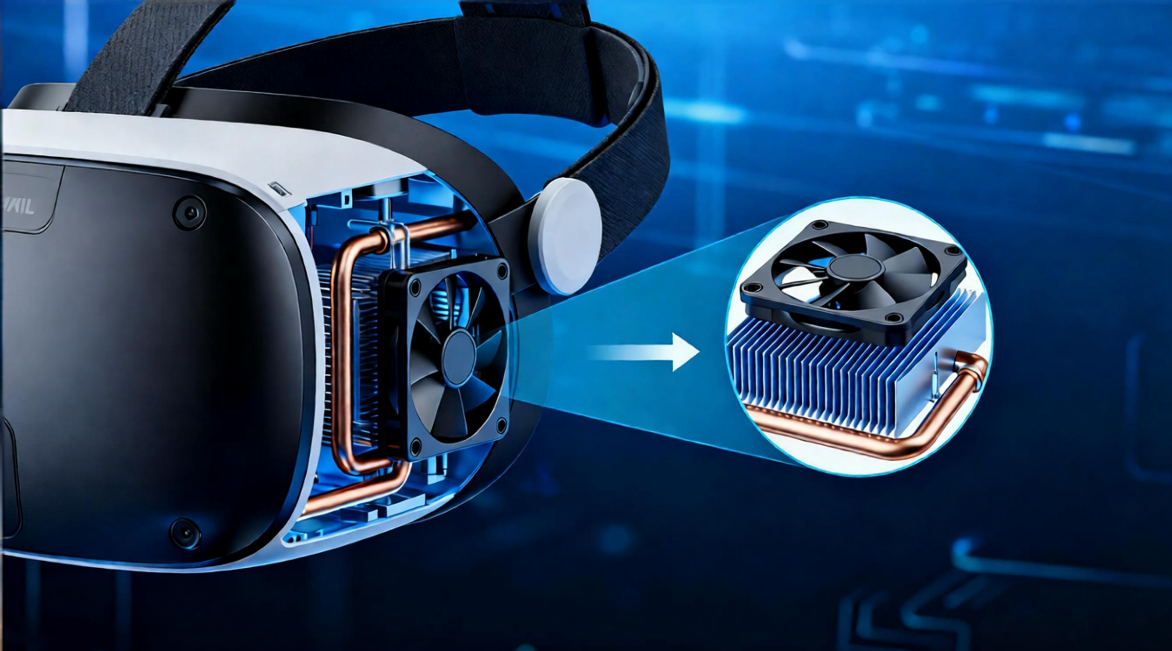
Thermoelectric Cooling (TEC) headsets operate based on the Peltier effect: in VR headsets, the TEC module is typically integrated beneath the main chip. When direct current passes through a thermocouple composed of P-type and N-type thermocouples, the cold end absorbs heat; the hot end connects to a heat pipe, transferring heat to the heat sink fins, and then a fan dissipates the heat to the outside. Simply put, as long as the cooling surface of the TEC is in close contact with the heat source, it can actively "draw away" heat, rather than passively waiting for it to dissipate—this is the key to its higher efficiency than traditional air cooling.
- Cools down faster and more effectively.
Traditional air cooling relies primarily on fans to accelerate heat dissipation, which is a form of "passive heat removal" with limited efficiency and slow response. In contrast, integrated TEC cooling systems can actively cool, resulting in faster and more efficient cooling, making them particularly suitable for high-load scenarios.
- Precise temperature control, more stable operation
TEC cooling chips have a temperature control accuracy of ±0.1℃, which can keep the chip in the optimal operating temperature range and effectively avoid performance fluctuations, screen stuttering or automatic frequency reduction caused by temperature fluctuations, making the VR experience smoother and more reliable.
- Ultra-thin, miniature, and lightweight design
The TEC system has a compact layout and a thickness that can be controlled within 1.2mm. It does not require large fans or complicated water pipes and can be easily embedded in thin VR headsets without increasing space burden.
- Silent and vibration-free operation for a more immersive experience.
The TEC system features an all-solid-state design with no mechanical parts, operates quietly, and will not interfere with your immersive experience.
- Two-way temperature control, strong environmental adaptability
By changing the direction of the current, TEC can switch from "cooling" to "heating". It provides heat protection in summer and insulation in winter, keeping the equipment within its optimal temperature range regardless of the ambient temperature.
As a leading global supplier of thermoelectric cooling devices, FerroTec provides high-performance thermoelectric cooling chips for the VR industry. Power, materials, and appearance can all be customized to enhance heat dissipation and improve the VR immersive experience. For product details or to obtain solutions, please contact us at 0571-89712612.