


From Voyager 1 to Smartwatches: How Thermoelectric Technology Converts "Waste Heat" into Electricity?
We waste a huge amount of thermal energy every day - hot exhaust from cars, hot air from factory chimneys, body heat... All of these contain recoverable energy. This article will introduce a special technology: without the need for fuel, as long as there is a temperature difference, it can directly convert waste heat into electrical energy - it is the thermoelectric power generation technology (TEG).
I.Thermoelectric Power Generation (Seebeck Effect)
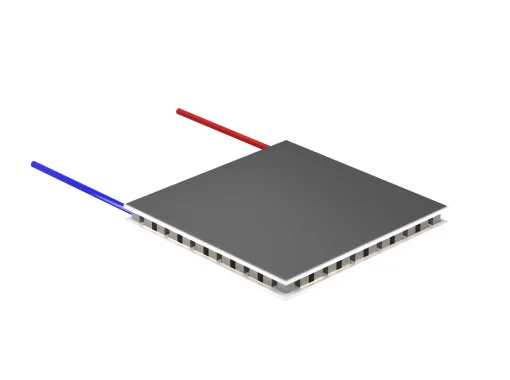
The core of thermoelectric power generation technology is a "sandwich" structure composed of two semiconductor materials:
• The N-type material is rich in free electrons
• The P-type material is filled with "holes" (which can be understood as positive charge carriers)
When one end of the thermoelectric sheet is heated while the other end remains cool, a temperature difference is formed. Driven by this temperature difference, the charge carriers in the N-type and P-type materials respectively migrate to the cold end, thereby forming a continuous current in the external circuit.
Although the electricity generated by thermoelectric power generation is not very large, it is sufficient to light up small lamps and even charge mobile phones. For example, nuclear batteries in space probes and USB charging ports on outdoor camping stoves all rely on this technology. Due to its advantages such as quiet operation, high reliability, and no maintenance requirements, thermoelectric power generation technology is mainly applicable to places where traditional generators cannot work, such as in space and outdoors.
II. Application Scenarios: From Space Applications to Daily Applications 
 Space Applications: Since its launch in 1977, NASA's "Voyager 1" probe has traveled a distance of 24 billion kilometers and is still transmitting signals to this day - all of which rely on the radioactive isotope thermoelectric generator (RTG) it carries. Each RTG uses 4.8 kilograms of plutonium-238 to decay and generate approximately 2400W of heat energy. This heat energy is then directly converted into electricity through thermoelectric materials such as lead telluride (PbTe), providing a stable output of approximately 157W of power, which continuously supports the communication link with Earth. Moreover, the "Curiosity" Mars rover and the "New Horizons" Pluto probe also employ temperature difference power generation technology - without the need for sunlight, they can operate reliably for decades in vacuum, extremely cold, and highly irradiated environments.

Industrial Application: In internal combustion engine vehicles, approximately 60% to 70% of the fuel energy is lost as waste heat. To achieve the reuse of waste heat, TEG modules (with a hot end temperature of over 200°C, creating a significant temperature difference with the cold end) are installed on the exhaust pipes. This can recover 5% to 10% of the energy from the engine's waste heat. These energies can power on-board electronic devices or assist in charging, thereby reducing fuel consumption. Similarly, we can deploy TEG systems in high-temperature industrial equipment such as steel mills, glass furnaces, and boilers, converting the originally wasted thermal energy into clean electricity.

Daily application: The human skin and the surrounding environment usually have a certain temperature difference. Through flexible TEG films, this tiny temperature difference can be converted into continuous weak electricity, providing power for smart watches, health monitoring patches and other devices. In mountainous areas, outdoors or disaster sites, the temperature difference between open flames and the air can also be utilized to provide emergency power for LED lights, mobile phones and other devices.
III. Technical Challenges and Future Prospects
Currently, the main bottleneck of thermoelectric power generation is the low efficiency of power generation - the power generation efficiency of commercial thermoelectric materials is only 5% to 8%, far lower than that of steam turbines (over 40%). In addition, high-performance thermoelectric materials usually rely on rare elements such as tellurium, bismuth and germanium, which not only have high costs but also tend to oxidize above 200°C, resulting in performance degradation or failure.
Nevertheless, thermoelectric power generation still has broad market prospects. In recent years, researchers have successfully developed new thermoelectric materials with ZT values exceeding 3.0, such as nanostructured Bi₂Te₃, topological insulators and organic-inorganic hybrid systems, significantly improving the thermoelectric performance. At the same time, the rapid development of flexible thermoelectric films and 3D printing integration technology has promoted the thermal power devices to fit curved surfaces, be embedded in fabrics, and even be directly "worn" on the body, which has created more possibilities for the future application of thermoelectric power generation. In the near future, thermoelectric materials may be applied like wallpaper on the surface of buildings to generate electricity using indoor and outdoor temperature differences; they can also provide power for massive Internet of Things devices without charging and with continuous power supply - making every degree of temperature difference convert into real energy.
FerroTec's leading thermoelectric products have 30 years of experience in the semiconductor cooling industry, covering customized product services such as semiconductor coolers, power plates, cooling modules, Chiller water chillers, and vehicle refrigerators. If you have any needs, please feel free to message for consultation.