


TEC Science Class | Solder Selection Guide: How to Balance Cost and Performance?
Welcome to the TEC Science Corner! In fields such as precision electronics, optical communications, and industrial refrigeration, thermoelectric coolers (TECs) are the key components for temperature control. However, a crucial but often overlooked element in the manufacturing process of thermoelectric coolers is the solder. It not only affects the thermal conductivity of the cooler element but also directly impacts the reliability and lifespan of the device. In this lesson, we'll introduce commonly used TEC solders and their characteristics in detail. If you have any questions about the article or want to learn more about TECs, feel free to leave a comment below!
I. Structure and Applications of Solder
TEC solder is located at the junction of the semiconductor and the electrode. Although used in small quantities, its role is significant. Structurally, the solder is the crucial bridge connecting the semiconductor chip and the electrode , directly determining the tightness and stability of the connection. Functionally, the reliability, lifespan, and even cooling efficiency of a thermoelectric cooler are directly linked to the solder's welding performance. High-quality soldering ensures long-term stable operation; conversely, defects in the solder or improper solder selection can lead to reduced cooling efficiency, device malfunction, or even disrupt the normal operation of the entire terminal equipment.
In short, the choice of solder directly affects the quality of the thermoelectric cooler. So how should we choose the right solder during the manufacturing process of thermoelectric coolers? Let's take a look at the commonly used solder types for thermoelectric coolers and their respective characteristics.
II. Low-temperature solder: A cost-effective choice
The core representative of low-temperature solders is bismuth-tin solder (Bi-tin, melting point 138℃) . Its biggest advantage lies in its outstanding cost-effectiveness: low material cost, simple welding process, no need for complex high-temperature equipment, and easy mass production even for small factories. For these reasons, bismuth-tin solder has become the first choice for most thermoelectric cooler manufacturers in China.
In terms of application scenarios, Bi solder is suitable for consumer products and low-temperature operating environments, such as small car refrigerators, water dispenser refrigeration modules, beauty devices, and home dehumidifiers. These electrical appliances do not have high requirements for operating temperature and are relatively cost-sensitive—Bi solder perfectly meets their needs.
III. Medium-temperature solder: Balancing performance and stability
Based on differences in melting point and composition, medium-temperature solders are mainly divided into two categories: SAC solder and 95 tin solder , which can meet the temperature control requirements of different mid-to-high-end applications.
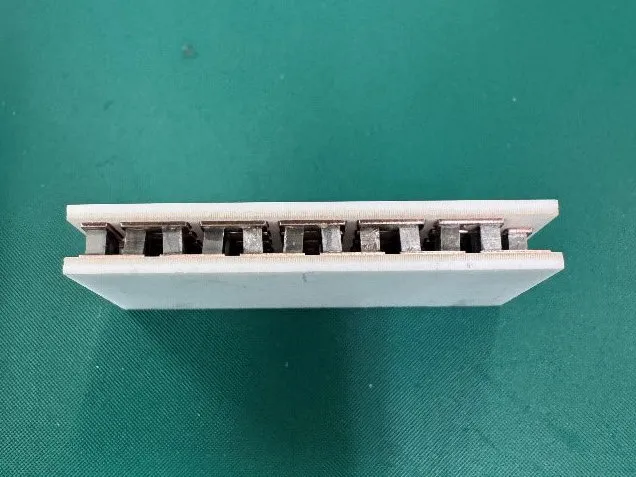
1. SAC solder (melting point 217℃): The material cost is slightly higher than low-temperature Bi tin solder, and the soldering process is equally simple and convenient. However, due to its relatively special performance positioning, its application scenarios are relatively limited—currently it is mainly used in power generation products, and is rarely used in ordinary refrigeration equipment.
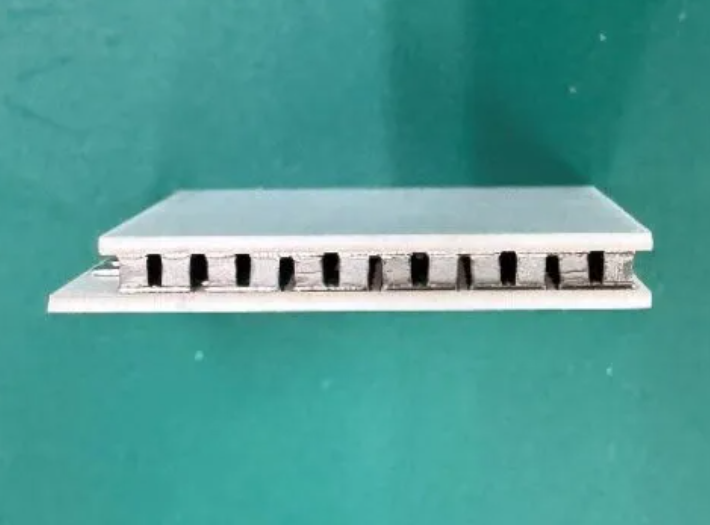
2. 95% tin solder (melting point 237℃): While the material cost is higher, the soldering process is mature, resulting in high solder strength and stability, and it can withstand medium to high temperature working environments. Therefore, it is widely used in industrial equipment with high reliability requirements, such as industrial chillers, precision instrument cooling systems, medical equipment, and temperature control modules for industrial automation equipment.
IV. High-Temperature Solder: High Performance, High Cost
High-temperature solders are mainly suitable for high-temperature working environments or special scenarios with extremely high reliability requirements. They are mainly divided into three categories: gold-tin solder, lead-tin solder, and silver paste .
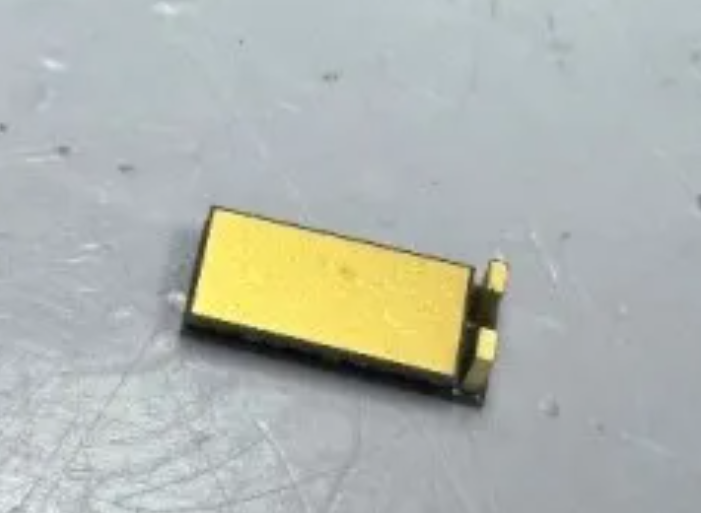
1. AuSn (Melt point 280℃): This solder contains gold and is the most expensive type of solder. However, its advantages are significant: high welding strength and long-term stable operation in complex high-temperature environments. Furthermore, its compact size makes it suitable for miniaturized products with extremely high reliability requirements, such as optical modules and fiber optic amplifiers in the optical communication industry. These products have stringent requirements for temperature control accuracy and long-term stability, making AuSn a key material for ensuring their performance. However, given the current continuous rise in gold prices, companies with limited cost capacity should carefully evaluate whether to use this type of solder .
2. Lead-tin solder (PbSn, melting point 287℃): This solder contains lead, which does not comply with the internationally recognized RoHS environmental standard. It is only used in small quantities in high-temperature power generation products with extremely low sales volume. Its use is currently strictly restricted.
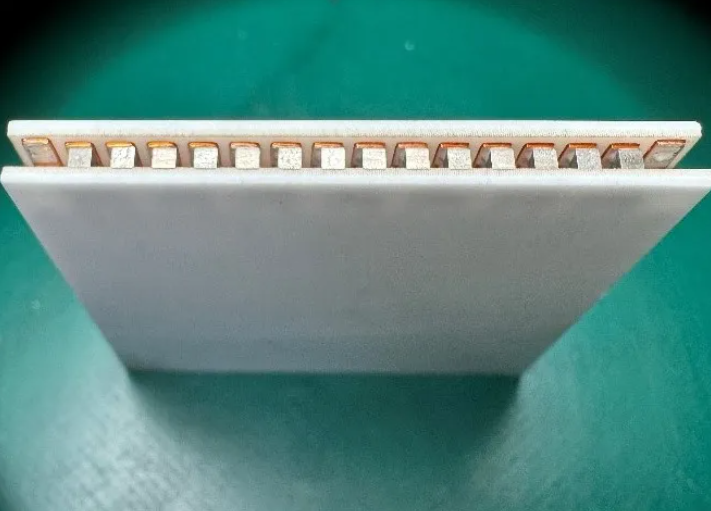
3. Silver Paste: Strictly speaking, silver paste is not a traditional solder, but its core component, silver particles, has a melting point as high as 961.78℃, giving it excellent high-temperature resistance. However, using silver paste as a solder faces two major challenges: first, the high silver content leads to high material costs; second, the mass production process for thermoelectric coolers is not yet mature, and it is currently still in the sample testing stage, not yet widely used in TEC mass production .
In short, there is no absolutely optimal solution for TEC solder selection—the key is to precisely match it with the product's application scenario, operating temperature, reliability requirements, and cost budget. FerroTec offers a variety of thermoelectric cooler, with customizable power, materials, and appearance (including solder selection) . For product details/soldering solutions, please contact us at 0571-89712612.