


Unveiling the cutting-edge technology behind gas sensors, let's explore how thermoelectric cooling technology safeguards family safety!
Why do gas alarms sometimes give false alarms or fail to detect? The problem often lies in the temperature: either too high or too low can affect the sensitivity of the gas sensor. To address this issue, we have incorporated a thermoelectric cooler inside the sensor - by precisely controlling the temperature, we enhance the stability, sensitivity, and lifespan of the sensor, effectively preventing false alarms and missed detections.
Ⅰ. Why is precise temperature control by TEC necessary for gas sensing?
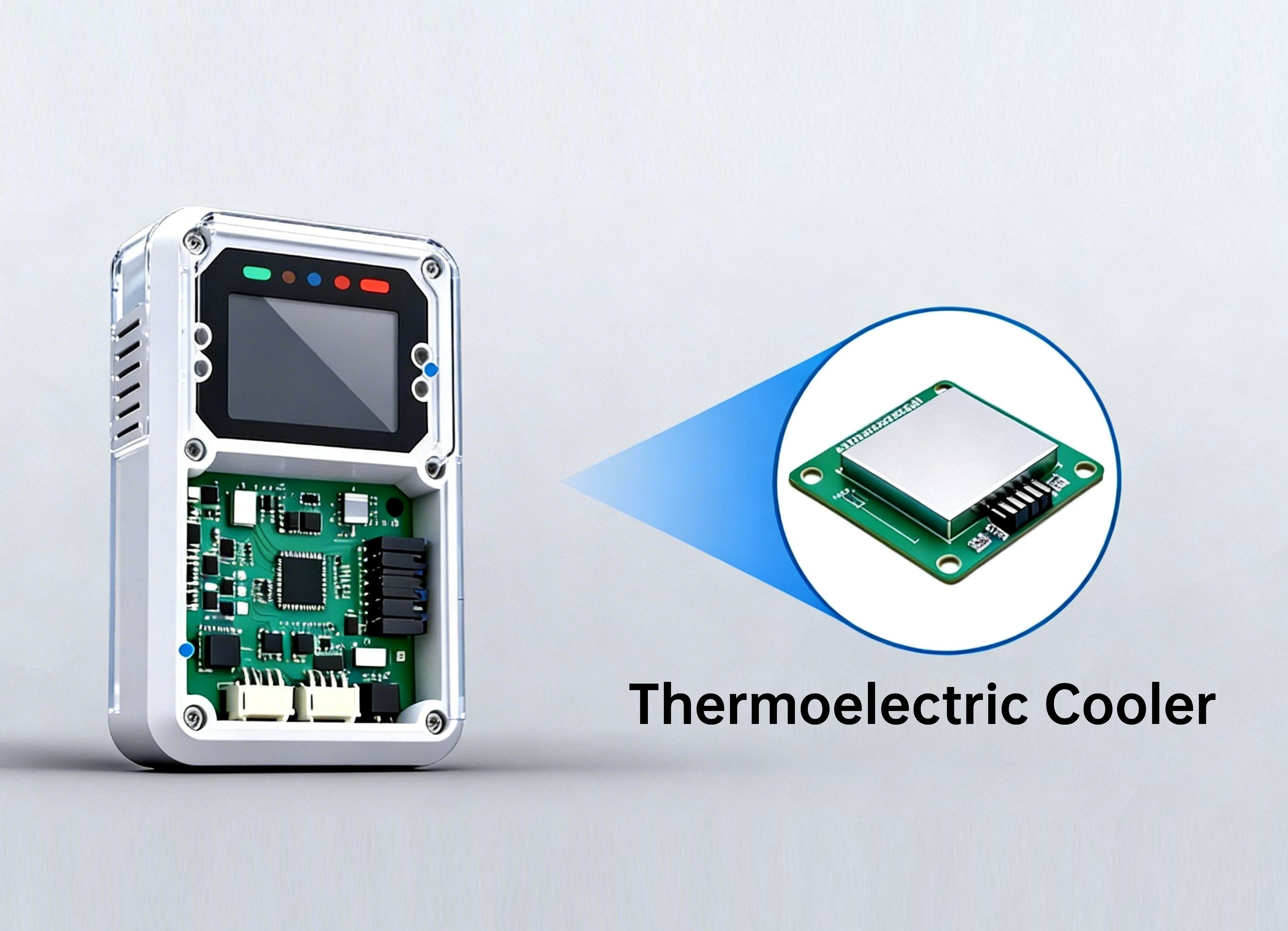
Many gas sensors (such as infrared NDIR sensors, electrochemical sensors, semiconductor metal oxide sensors, etc.) are highly sensitive to temperature changes: when it's too hot, the signal is prone to drift, and even if there is no gas leakage, the alarm keeps sounding; when it's too cold, the sensor reacts sluggishly, and when a dangerous gas arrives, it fails to sound the alarm; when the humidity is too high, the lens is prone to condensation, blocking the infrared light path, causing the sensor to malfunction directly.
Since the accuracy of the sensor alarm directly affects personal safety, we need to find a compact and precise temperature control device: one that can be easily integrated into the gas sensor and can perform precise temperature management. The thermoelectric cooler (TEC) has become the ideal choice for precise temperature control of gas sensors due to its small size, precise temperature control, silent operation, environmental friendliness, and no use of fluorine. Based on the Peltier effect, it can stabilize the temperature of the core component within the optimal working temperature range, with a temperature control accuracy of ±0.1℃, fully avoiding the impact of environmental temperature fluctuations on the sensor's detection performance.
❌️ Resistance heating + heat sink: It can only increase temperature but not cool down. The temperature control capability is limited.
❌️ Fan: Dependent on air flow, it cannot truly cool down the environment. Moreover, it is large in size, generates high noise, and is prone to dust accumulation.
❌️ Phase change materials: Have low temperature control accuracy, slow response, and cannot achieve dynamic adjustment.
II. The application advantages of TEC in the field of gas sensing
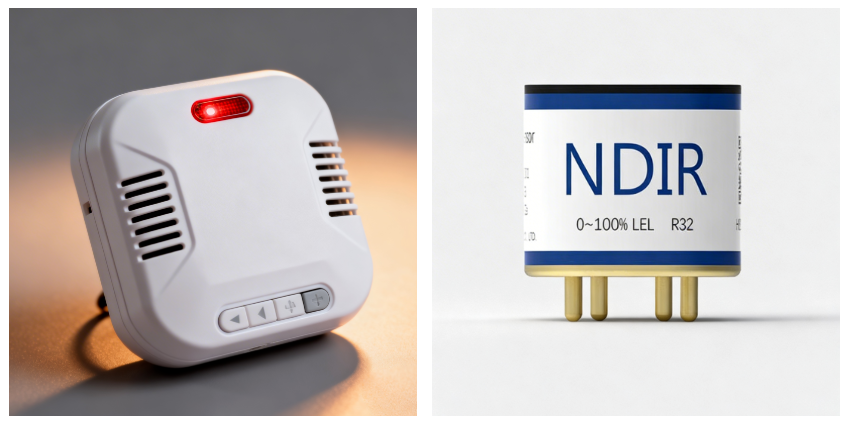
✅ Stabilize the temperature of the infrared source/detector (NDIR type)
NDIR-type gas alarms such as those for natural gas and carbon dioxide need to measure the concentration by allowing infrared light to pass through the gas. However, the infrared light source and the detector are extremely sensitive to temperature - any temperature fluctuation will cause the output signal to drift, resulting in inaccurate measurements. With the addition of a thermoelectric cooler, the system can stabilize the temperature of the key components within the range of 40 to 50 degrees Celsius, significantly improving the stability and reliability of the measurements.
✅ Acceleration sensor response & recovery (semiconductor/MOS type)
Semiconductor gas sensors such as alcohol, VOC, and carbon monoxide sensors need to operate normally in a high-temperature environment ranging from 200 to 400 degrees Celsius. The traditional solution has slow preheating and difficult cooling. In contrast, thermoelectric cooler coolers can quickly heat up to the target temperature and then quickly cool down after the detection is completed. This not only shortens the response time but also effectively extends the lifespan of the sensors.
✅ Prevent condensation in high-temperature environments
In a high-humidity environment, the sensor window is prone to condensation, blocking the infrared light path. At this time, the function of the thermoelectric cooler cooler is to control the temperature of the detection chamber above the dew point, thereby eliminating the possibility of condensation at its source and ensuring that the optical path remains clear at all times.
III. Applications of TEC in the field of gas sensing
Thermoelectric coolers are widely used in the field of gas sensing, providing stable and reliable temperature control for high-precision detection equipment:
Industrial safety: Used for alarms for gases such as methane (CH₄), hydrogen sulfide (H₂S), and carbon monoxide (CO), to ensure accurate alarm performance;
Home security: Equipment for detecting gas leaks and carbon monoxide (CO) poisoning, safeguarding family safety;
Environmental Monitoring: Assisting Air Quality Detectors in Accurately Measuring Pollutants Such as Carbon Dioxide (CO₂) and Volatile Organic Compounds (VOCs);
Medical Health: Used in breath analyzers, it offers highly sensitive detection of biomarkers such as ethanol and acetone.
The alarm system must be reliable and the temperature must be stable. The precise temperature control function of the thermoelectric cooler cooler is often the key for a product to pass certification and gain market share. As a global leading supplier of thermoelectric cooler cooling devices, Ferrotec advanced-TE can provide gas sensor manufacturers/developers with high-performance thermoelectric cooler cooling sheets, with customizable power, materials and appearance. If you want to know more about the product details or get the solution, please contact us at 13575452327.