


Beyond liquid nitrogen for treating warts, thermoelectric cooling technology is driving medical cryotherapy into the era of intelligence!
In the past, dermatologists often used liquid nitrogen that "gave off white smoke" for freezing treatment of warts - this method had extremely low temperature (-196℃) and was highly effective. It not only caused obvious pain but also easily damaged surrounding tissues and even led to pigmentation. Nowadays, more and more hospitals and medical beauty institutions are beginning to adopt the new TEC cryotherapy device. Compared with liquid nitrogen, it can not only precisely and stably maintain the treatment temperature within the set range, but also achieve programmed temperature rise and fall control, significantly reducing treatment risks, while significantly enhancing patients' comfort and safety.
I.Why is TEC technology needed in the field of cold therapy?
The limitations of traditional liquid nitrogen freezing technology:
❌️ The temperature is fixed at -196℃ and cannot be adjusted, which can cause excessive tissue damage;
❌️ The operation relies on the doctor's experience and has poor repeatability;
❌️ The storage and transportation of liquid nitrogen are inconvenient, with risks of leakage and frostbite;
❌️ It is impossible to achieve "gradual cooling" or "programmed rewarming".
In modern cryotherapy treatments for superficial skin diseases (such as warts, freckles, sebaceous gland tumors) and medical beauty projects (such as pore reduction, soothing and repairing), higher requirements have been imposed on the equipment performance: not only does the temperature of the cold head need to be precisely adjustable within a certain range, but the heating and cooling rates also need to be controllable to meet different treatment needs. In addition, the equipment must be small and lightweight, allowing doctors to operate flexibly in fine areas such as around the eyes and on the nose bridge - these are precisely what the traditional liquid nitrogen freezing technology cannot achieve. Therefore, in the new generation of cryotherapy treatment devices, we have integrated thermoelectric cooling plates (TEC).
II. Advantages of TEC in the field of cold therapy
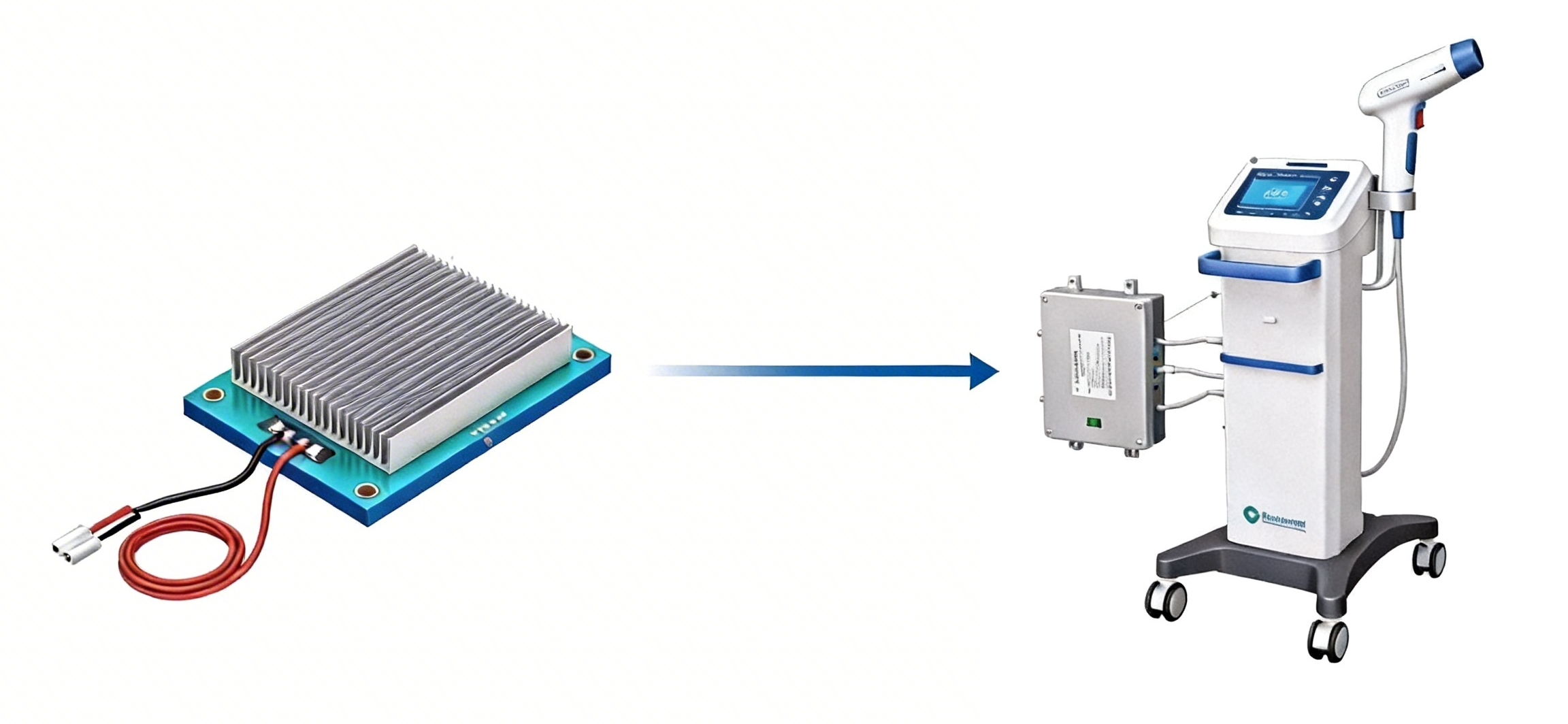
In the TEC cryotherapy device, the thermoelectric cooling sheet (TEC) is usually integrated at the front end of the treatment handle, serving as a cold source that directly contacts the skin. Its working principle is simple: when powered on, one side of the cooling sheet becomes cold while the other side generates heat. The cold side is in close contact with the treatment head, precisely transferring low temperature to the skin; the hot side discharges heat through a cooling fan in a timely manner. The entire process does not require refrigerants, has no risk of liquid leakage, operates quietly without vibration, and can be safely used for precise treatments on the face or sensitive areas.
✅ Precise Temperature Control
By adjusting the current size, the TEC can quickly stabilize the treatment head within the set temperature range in just a few seconds, with a temperature control accuracy of ±0.5℃. This ensures consistent dosage each time, thereby achieving the expected treatment effect.
✅ Compact and Easy Integration
The TEC module is small in size, with a thickness of only 3 to 5mm, making it easy to integrate into lightweight handheld treatment handles, with easy operation without burden.
✅ Rapid Response
It cools immediately upon power-on and stops immediately upon power-off. It supports pulse or intermittent freezing modes, allowing flexible adaptation to different skin types, lesion types, and personalized treatment plans.
✅ Quiet Operation
It has no compressor, no refrigerants, and no mechanical moving parts. The operation process is quiet and stable, suitable for sensitive areas such as the face and around the eyes, significantly enhancing treatment comfort.
✅ Bidirectional Temperature Control
It not only cools but also can achieve heating function through reverse power-on. After treatment, it automatically gently rewarms, effectively reducing the risks of tissue stress, redness, or pigmentation, making cryotherapy safer and more user-friendly.
III. Technical Challenges and Breakthrough Directions
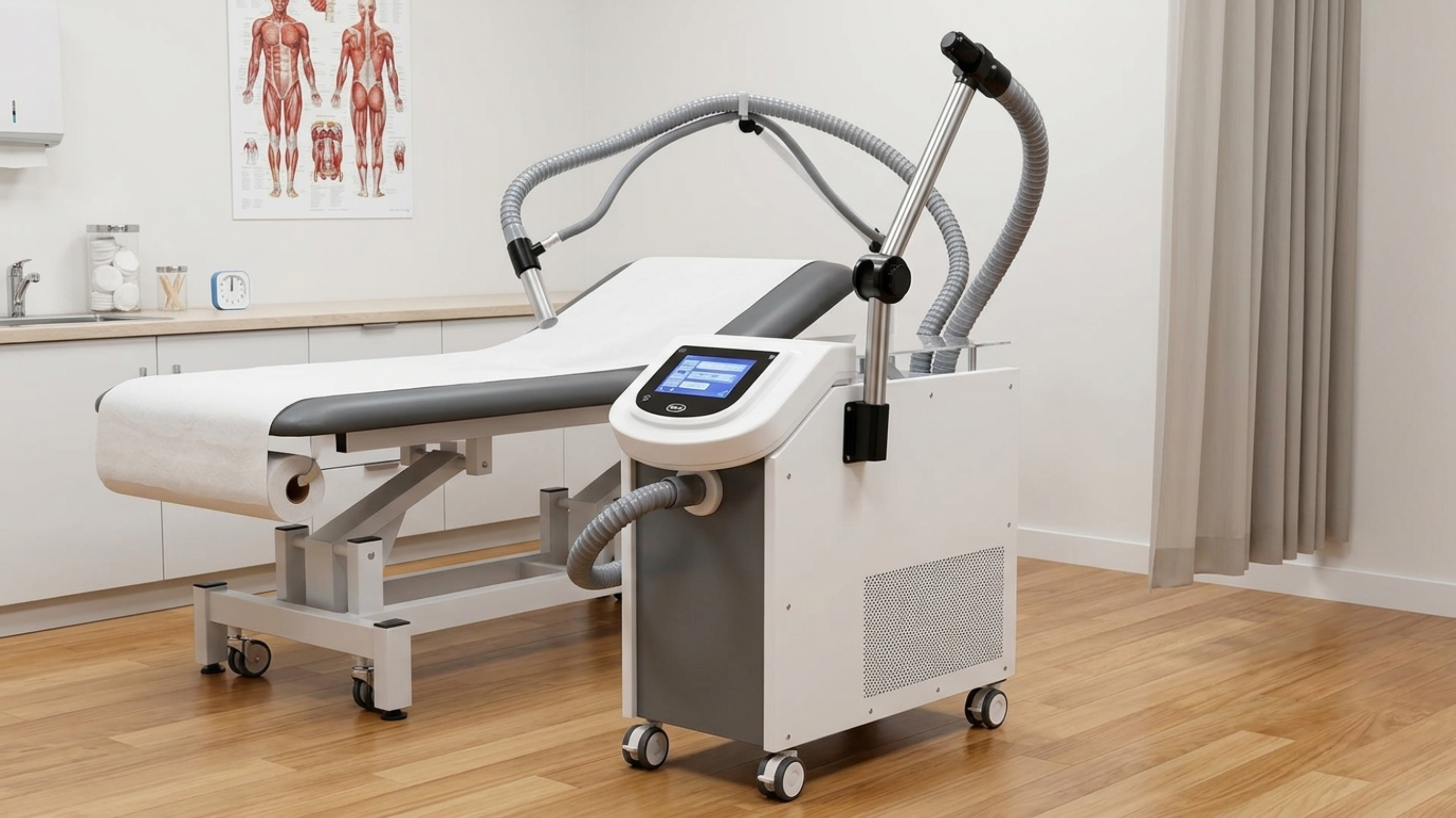
In handheld devices such as cryotherapy machines, thermoelectric cooling chips face three major challenges:
First, they need to have both high power and small size - the handle space is limited, so ultra-thin but highly efficient modules must be used;
Second, low temperatures are prone to condensation - the cold surface will condense when exposed to air, so sealing and special coatings must be done to prevent water damage to the circuitry;
Third, they must be durable enough - medical equipment usually needs to operate stably for more than 5 years without easily breaking down.
To meet these requirements, Ferrotec's leading thermoelectric company has launched a highly reliable TEC module specifically designed for medical scenarios: all dimensions, current, appearance, etc. can be customized as needed, providing stable and precise temperature control guarantees for cryotherapy machines.
Thermoelectric cooling technology is redefining medical cryotherapy through precise temperature control. With the continuous breakthroughs in thermoelectric materials, innovative applications such as wearable cooling patches and integrated cryogenic probes for endoscopes will gradually be implemented, driving TEC cryogenic medical treatment towards a more lightweight, intelligent, and closer-to-clinical-need direction.