


TEC Science Class| Unveiling the Core Material of Semiconductor Cooling Sheets - Tellurium-Bismuth Oxide
Welcome to the TEC Science Popularization Classroom! This week, let's talk about the core material of the thermoelectric cooling chip (TEC) - bismuth telluride (Bi₂Te₃). Why are most civilian/industrial-grade TECs unable to function without bismuth telluride? What are its indispensable advantages? After reading this article, you will understand. If you have any questions about the content of the article or want to learn more about TEC knowledge, please leave a message in the comment section.
I. What is bismuth telluride?
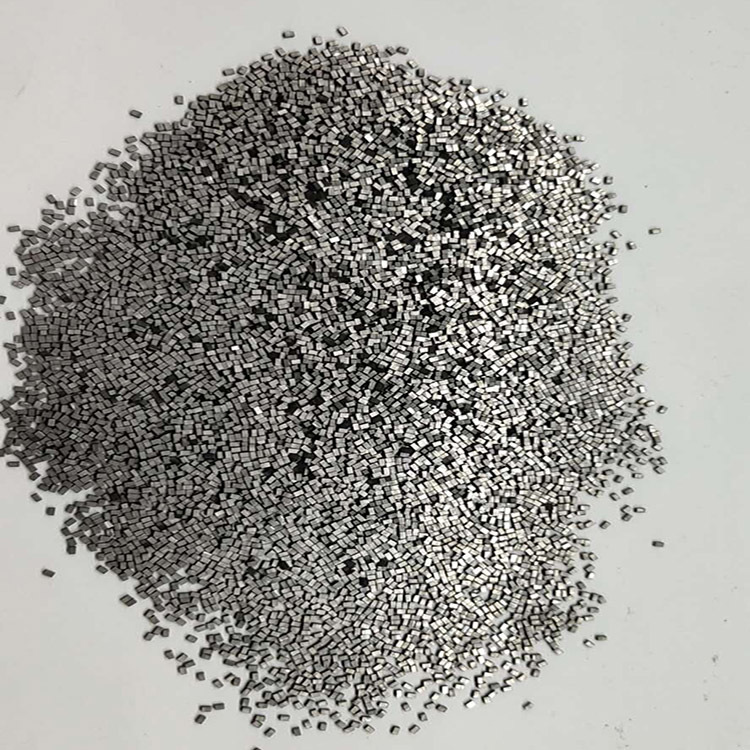
Bismuth telluride (Bi₂Te₃) is an important thermoelectric material that combines excellent electrical conductivity, outstanding thermoelectric conversion efficiency, and unique topological insulator properties. The core indicator for measuring its performance is the "ZT value" - the higher the ZT value, the higher the energy conversion efficiency of the material in cooling or temperature difference power generation. At room temperature, the ZT value of traditional commercial bismuth telluride is usually between 1.0 and 1.2; while in laboratory conditions, through advanced technologies such as material doping and nanostructure regulation, the ZT value can be further improved, demonstrating higher thermoelectric performance and application potential.
II. Why is bismuth telluride so popular?
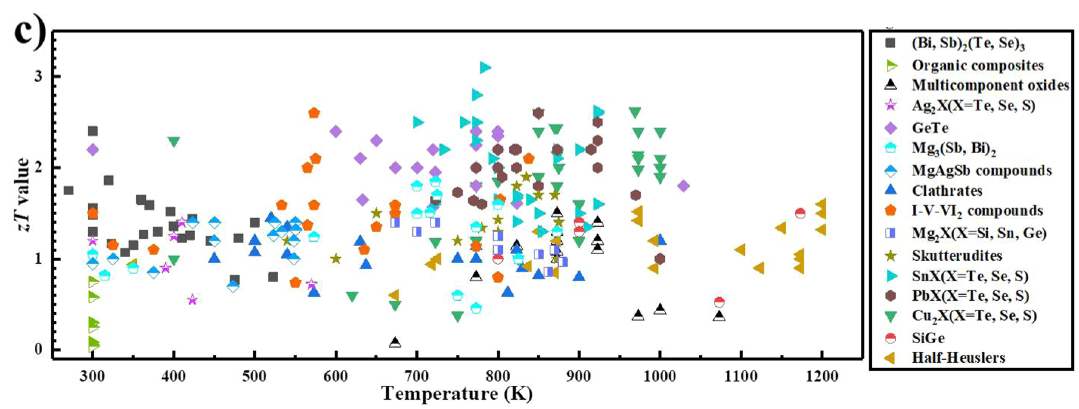
Apart from bismuth telluride, there are many other thermoelectric materials available for selection. However, in practical applications, the choice of material mainly depends on the working temperature range.
☑️ Low-temperature range (<300℃): Bismuth telluride (Bi₂Te₃) and its alloys have the highest thermoelectric performance and are the mainstream choice in room-temperature refrigeration and precision temperature control fields.
☑️ Medium-temperature range (300-700℃): Tellurium telluride (PbTe), skutterudites, and other materials exhibit better thermoelectric efficiency and are commonly used in industrial waste heat recovery, thermoelectric power generation, and other medium-high temperature scenarios.
☑️ High-temperature range (>700℃): Silicon germanium alloys (SiGe) and other materials have excellent high-temperature stability and are suitable for extreme environments, such as radioactive isotope thermoelectric generators (RTGs) in deep space probes.
Since most precision electronic devices (laser devices, processors, infrared detectors, etc.) operate near room temperature. In this temperature range, bismuth telluride is almost the only option.
III. Advantages and Disadvantages of Bismuth Telluride
☑️Advantages:
1. Outstanding room-temperature performance: The commercial ZT value is stable at 1.0 - 1.2, meeting the performance requirements of most precision temperature control devices.
2. Mature preparation process: Zone melting method, powder metallurgy, plasma sintering (SPS), etc. have achieved large-scale production.
3. High reliability: No moving parts, no noise, no maintenance required, long service life.
4. High temperature control accuracy: Can achieve temperature control accuracy of ±0.01℃, meeting the temperature control requirements of PCR instruments, optical modules, etc.
❎️Weaknesses:
1. High cost and scarce resources: The content of tellurium is low, the crustal content of tellurium is also low, and the industrial price of tellurium has risen to 160-200 million yuan per ton.
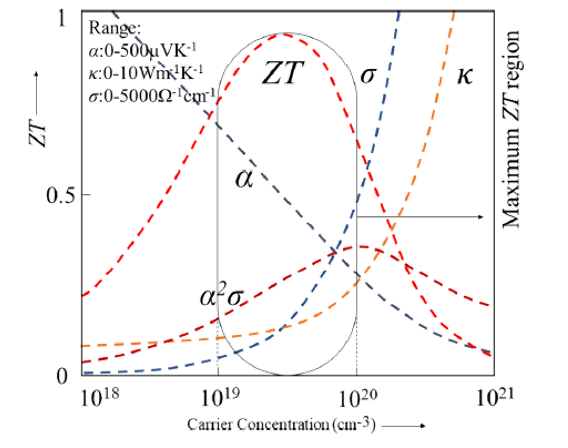
2. Performance bottleneck: The ideal thermoelectric material needs to simultaneously possess high electrical conductivity and low thermal conductivity, but these two properties cannot be achieved simultaneously. The ZT value has remained between 1 and 2 for a long time, making it difficult to achieve a significant improvement.
3. Environmental and supply chain risks: Tellurium oxide has certain toxicity, and it needs to be strictly controlled during production, use, and disposal to reduce environmental and health risks. At the same time, excessive reliance on a single scarce resource can easily lead to supply disruptions or price fluctuations.
IV. Potential Alternative Materials
Among the current candidate materials, bismuthized magnesium (Mg₃Bi₂) is currently the most promising alternative. Relevant studies have shown that the thermoelectric cooling module based on bismuthized magnesium can achieve a cooling temperature difference of approximately 59K at room temperature, with a cooling power density of 5.7W/cm². After a 270-hour, 3000-cycle current test, the performance retention rate still reached 98%. Moreover, the reserves of magnesium and bismuth are much higher than those of tellurium, making the material cost relatively lower, and the mechanical properties are also better. In the next 5 to 10 years, bismuth telluride will remain the mainstream material for TEC; however, in the long term, new-generation materials such as bismuthized magnesium are expected to achieve substitution and surpassing.
Currently, researchers are enhancing the performance of existing thermoelectric materials through methods such as band engineering, element doping, and composite structure design. At the same time, they are also actively testing the feasibility of new materials like bismuth magnesium (Mg₃Bi₂). In the future, thermoelectric cooling technology is expected to achieve a better balance in terms of efficiency, cost, and environmental friendliness, and will steadily progress towards a more efficient, economical, and sustainable direction.