


The Application of TEC in Astronomical Cameras: Analysis of Precise Temperature Control Solutions for CCD/CMOS
Why can professional astronomical cameras capture the intricate structures of stars and galaxies that are billions of light-years away, while ordinary cameras only produce a patch of noise? The answer lies not in the larger lenses, but in the sophisticated TEC temperature control system inside the camera body.
I. Why are astronomical cameras inseparable from precise temperature control?
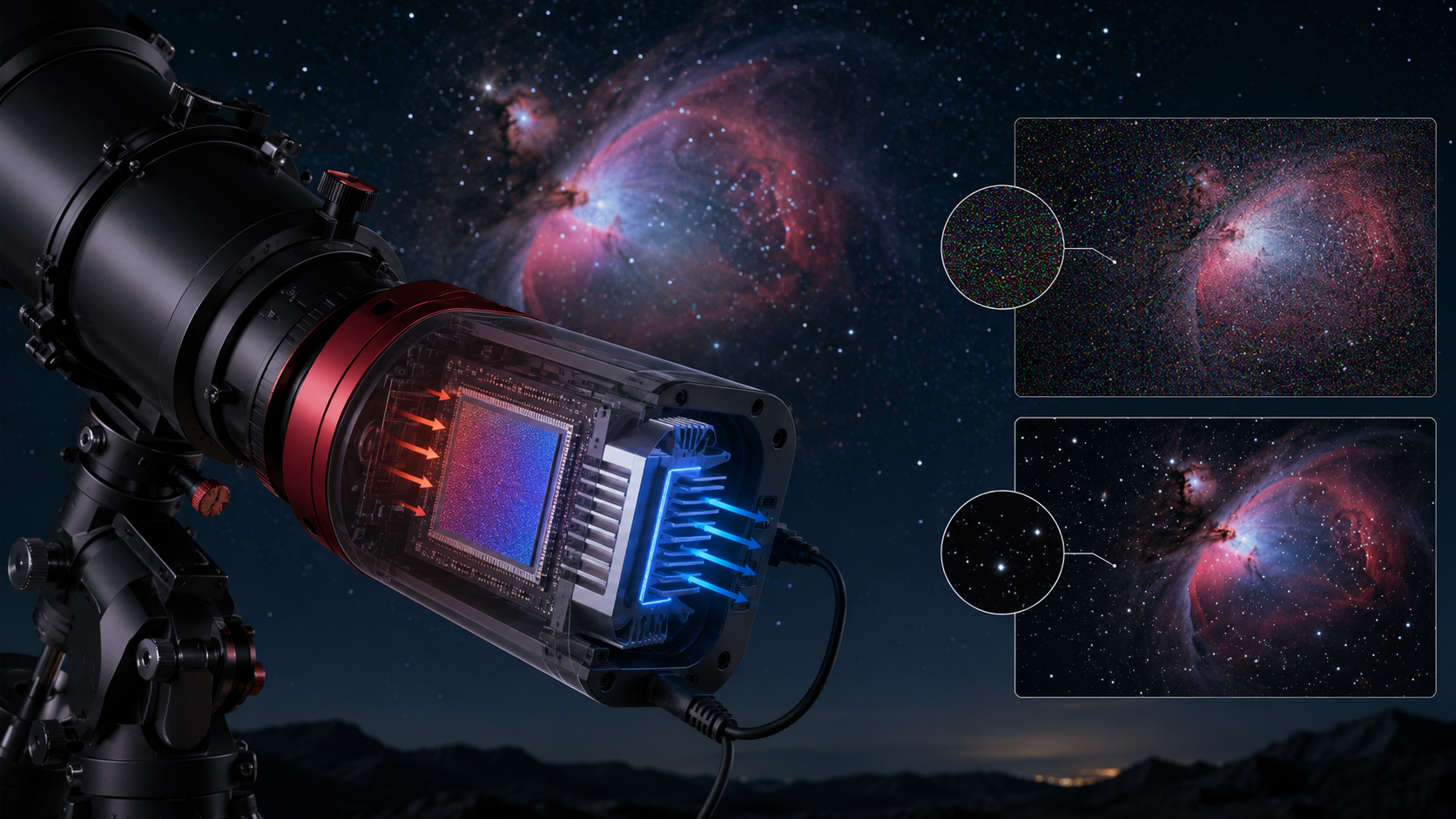
Astronomical photography is completely different from ordinary photography – capturing deep space objects such as nebulae and galaxies requires long exposures of several seconds or even minutes. During this process, the sensor (CCD/CMOS) will continue to generate heat. The higher the temperature, the stronger the dark current noise, and the image will be filled with random dots, completely obscuring the details of the faint celestial bodies. Even worse, temperature fluctuations can also disrupt imaging consistency, making it difficult to meet the requirements of scientific research level or high-precision observations.
Therefore, thermoelectric cooling (TEC) technology, with its advantages of compact structure, precise temperature control (high-performance TEC solutions can achieve an ultra-40℃ temperature difference), quietness, and no vibration, has become the preferred core temperature control solution for scientific research-level astronomical equipment, ensuring that the image clarity is not affected by temperature variations.
II. Advantages of TEC in Astronomical Cameras
1. Adhering to the sensor for precise temperature control
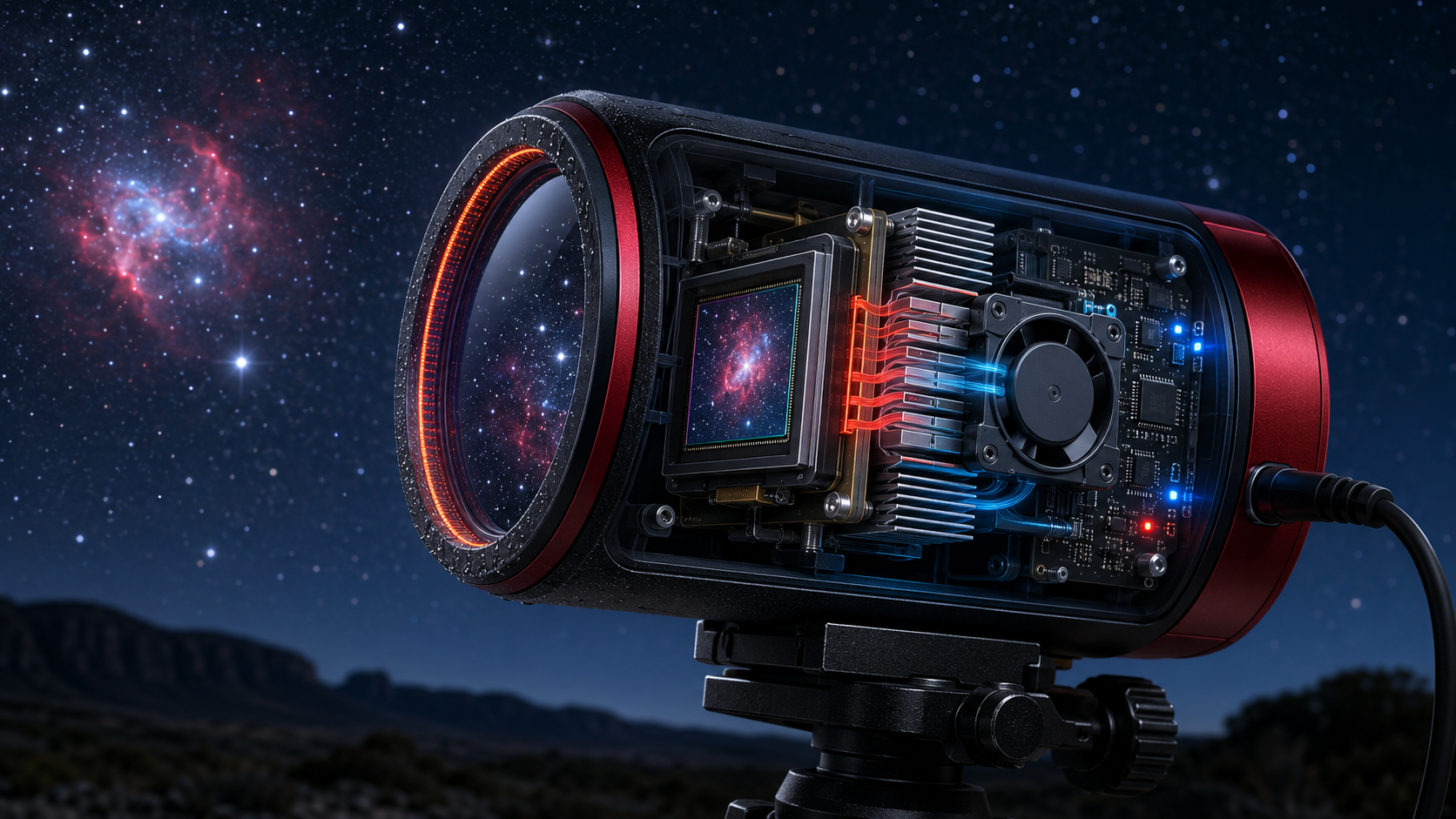
The cold end of the cooling chip is seamlessly attached to the high thermal conductivity metal base and the image sensor, minimizing thermal resistance to the greatest extent. Based on the Peltier effect, the sensor temperature can be stably controlled below the ambient temperature by 20-40℃, significantly suppressing dark current noise, providing a high signal-to-noise ratio and high stability imaging foundation for deep space photography.
2. Zero vibration silent operation, avoiding image blurring
The entire process is silent and without vibration, which is an indispensable core advantage of TEC in the field of astronomy. Even when facing long exposures of several tens of minutes, it will not cause star points to trail or the picture to be blurry due to mechanical shaking, ensuring each frame of image is sharp and clear. The red nebula previously submerged in noise, the spiral structure of distant galaxies, and the faint trajectories of small planets can thus be clearly presented.
3. Millisecond response, ±0.1℃ ultra-high precision
Relying on high-precision temperature control chips and closed-loop feedback systems, TEC can dynamically adjust the cooling power within milliseconds, achieving an ultra-high temperature control accuracy of ±0.1℃. The temperature fluctuation during observation is extremely small, ensuring the consistency of multiple long-exposure images and meeting the requirements of scientific research-level imaging.
4. Lightweight design, suitable for outdoor needs
The weight and size of the astronomical camera directly affect the travel convenience of astronomy enthusiasts. The TEC cooling chip is a tiny piece, extremely lightweight, and can be easily integrated into the camera body, almost without adding additional burden, making outdoor shooting more convenient and efficient.
5. Anti-condensation design, safeguarding equipment safety
Low-temperature operation is prone to cause condensation on the surface of the lens or sensor, affecting imaging and even damaging the equipment. Therefore, professional astronomical cameras integrate an intelligent anti-condensation module - through a micro-heating ring or humidity sensing linkage, it maintains the sensor at a low temperature while controlling the optical window temperature above the dew point, ensuring clear imaging throughout the process.
III. Why choose FerroTec Leading Thermal?
The TEC cooling chip is not a standard component but a highly customized temperature control core. FerroTec's leading thermoelectric cooling technology, leveraging 33 years of experience in thermoelectric cooling, precisely addresses the three key challenges of temperature control in astronomical cameras:
☑️ Miniature high precision: With a thickness as low as 2.5mm, it supports high-precision temperature control of ±0.1℃ and millisecond-level dynamic response, and can flexibly adapt to various compact camera structures;
☑️ Strong temperature difference: It can achieve a temperature difference of over 40℃, with efficient heat dissipation at the hot end, and has been verified through thousands of temperature cycles to ensure long-term stability and reliability;
☑️ Full parameter customization: Parameters such as size, voltage, power, and interface can be matched one-to-one according to the characteristics of CCD/CMOS chips and the overall requirements of the system.
FerroTec's leading thermoelectric technology can consistently provide TEC cooling chips and related temperature control solutions for astronomical camera brands and research institutions. If you have such requirements, please feel free to contact us at 13575452327!