


From Aerospace to Healthcare: Frontier Applications and Future Directions of TEC Deep Cooling Technology
In the field of thermoelectric cooling, deep cooling (deep cooling / cryogenic cooling) generally refers to the condition where the target temperature is reduced to a level far below the normal temperature. Industry standards typically refer to a temperature of 200K or below. Due to the limitations of physical structure, the cooling capacity of traditional single-stage TEC has a clear upper limit: at a room temperature of 300K, the maximum temperature difference for cooling is no more than 70K, and the lowest temperature limit at the cold end is approximately 230K (-43℃). To achieve deep cooling below 200K, a multi-stage cascaded TEC scheme must be adopted.
I. Main Application Scenarios of Deep Cooling
1. Infrared Detection and Astronomical Imaging
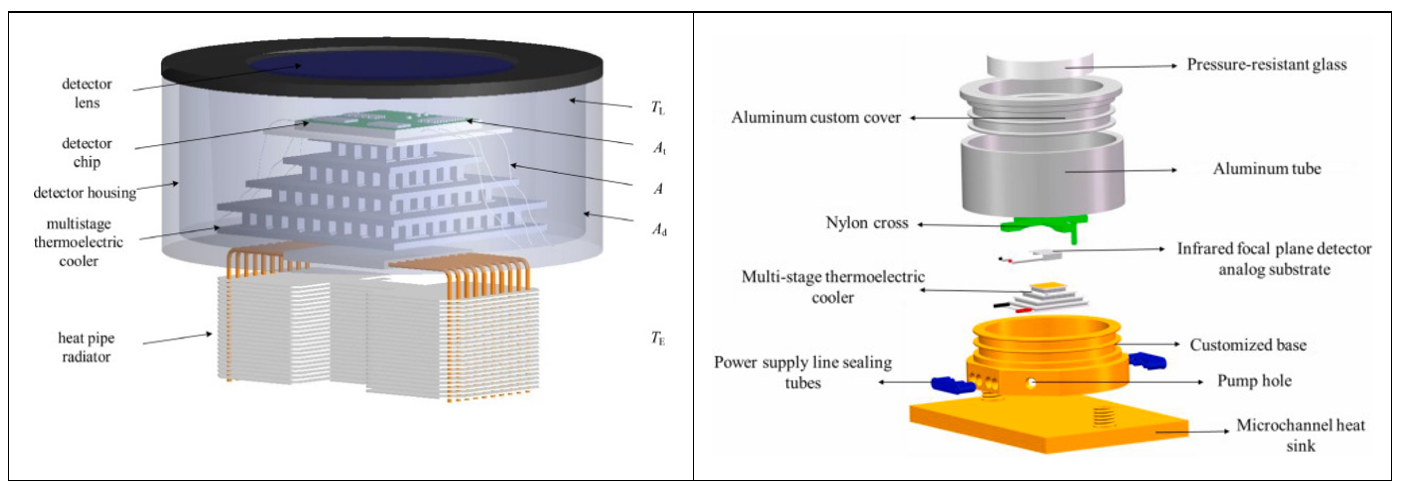
The detection sensitivity of semiconductor photodetectors is highly negatively correlated with the operating temperature: when the temperature drops below 200K, the thermal noise of the device will be significantly suppressed, and the detection accuracy and imaging performance will be qualitatively improved.
In this type of low-temperature sensing scenario, multi-stage TEC has become an indispensable core cooling solution. Through the design of two-stage and three-stage cascading structures, multi-stage TEC can achieve an effective temperature difference of 60-80°C under normal vacuum low heat load conditions; in high vacuum environments, the maximum temperature difference can reach 100-120°C. It can stably control the device temperature within the low-temperature range, thereby reducing the interference of thermal noise from the root cause.
Relying on its excellent precise low-temperature cooling capability, multi-stage TEC can effectively improve the imaging clarity and weak light detection performance of satellite astronomical imaging, machine vision, and high-speed precision detection equipment.
2. Superconductivity and Quantum Computing
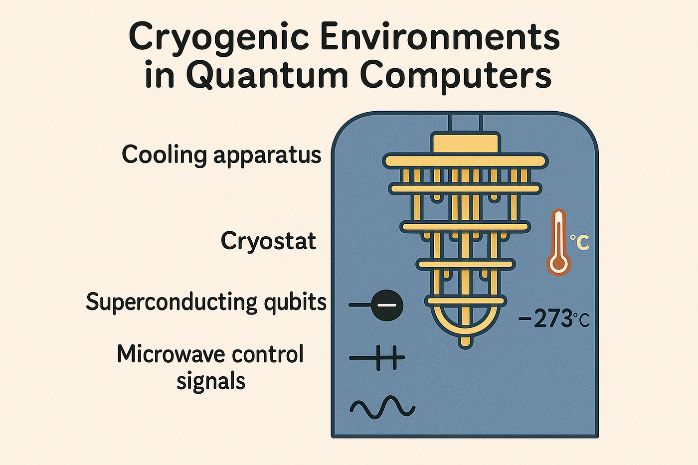
Superconducting systems and quantum computing equipment have a strict requirement for a vibration-free, low-temperature environment. The mechanical vibration of compressor-type refrigerators can severely disrupt the coherence of quantum states. The critical temperature of some superconductors has been raised to 134K (such as HgBa₂Ca₂Cu₃O₈), and the six-stage thermoelectric cooler precisely covers this temperature range.
3. Biomedical and Scientific Instruments
In the fields of life science and health medicine, many precision instruments rely on a stable low-temperature environment. Multi-stage thermoelectric coolers have broad application prospects in the temperature control systems of these instruments due to their advantages such as large temperature difference, low thermal inertia, and convenient temperature rise and drop switching. For example, in cryosurgical applications, the efficiency of multi-stage TEC is nearly 22.8% higher than that of a single-stage.
II. Core Challenges in Deep Cooling
1. Degradation of Material Properties at Low Temperatures
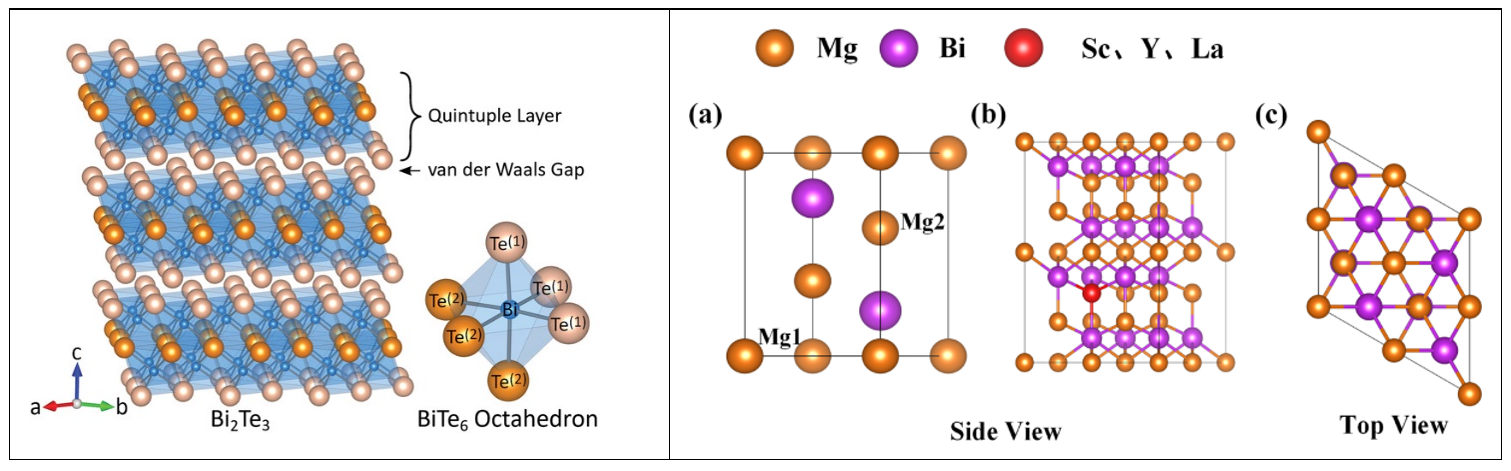
Since the 1950s, Bi₂Te₃-based alloys have dominated the commercial thermoelectric cooling market due to their excellent room-temperature thermoelectric properties. However, their performance rapidly deteriorates at low temperatures - below 190K, the material's ZT value significantly decreases, and the cooling efficiency significantly declines, limiting the application of thermoelectric cooling in the deep-temperature field.
Bi-Sb alloys are currently the best deep-temperature thermoelectric materials. However, the binary phase diagram of this material has a wide range of solid-liquid coexistence regions, and the preparation process has high thresholds; moreover, the thermal performance of conventional Bi-Sb single crystals and polycrystalline blocks is poor, hindering the large-scale application of deep-temperature TEC.
2. Efficiency Bottleneck
The key bottleneck of thermoelectric cooling lies in efficiency. The space thermoelectric cooling technology has long faced various problems such as high power consumption and low coefficient of performance (COP), which have limited its application in future aerospace engineering. Irreversible losses such as heat conduction between intermediate stages, Joule heat, and contact thermal resistance severely restrict the lowest achievable temperature. From the design perspective, multi-stage coolers are often designed based on the maximum cooling capacity of a single stage, resulting in a relatively low actual conversion efficiency; the insufficient research on low-temperature thermoelectric materials also limits the improvement potential of multi-stage coolers' performance.
3. Marginal Effect of Cascading
Multi-stage cascading is not necessarily better with more stages. Simulation studies have shown that as the number of stages increases, the increase in the maximum cooling temperature difference exhibits a significant marginal diminishing effect, and the cooling capacity is the same. How to maximize the cooling temperature difference within a limited number of stages is the core challenge in device design.
III. Future Development Directions of Deep Cooling
1. Breakthrough in New Thermoelectric Materials
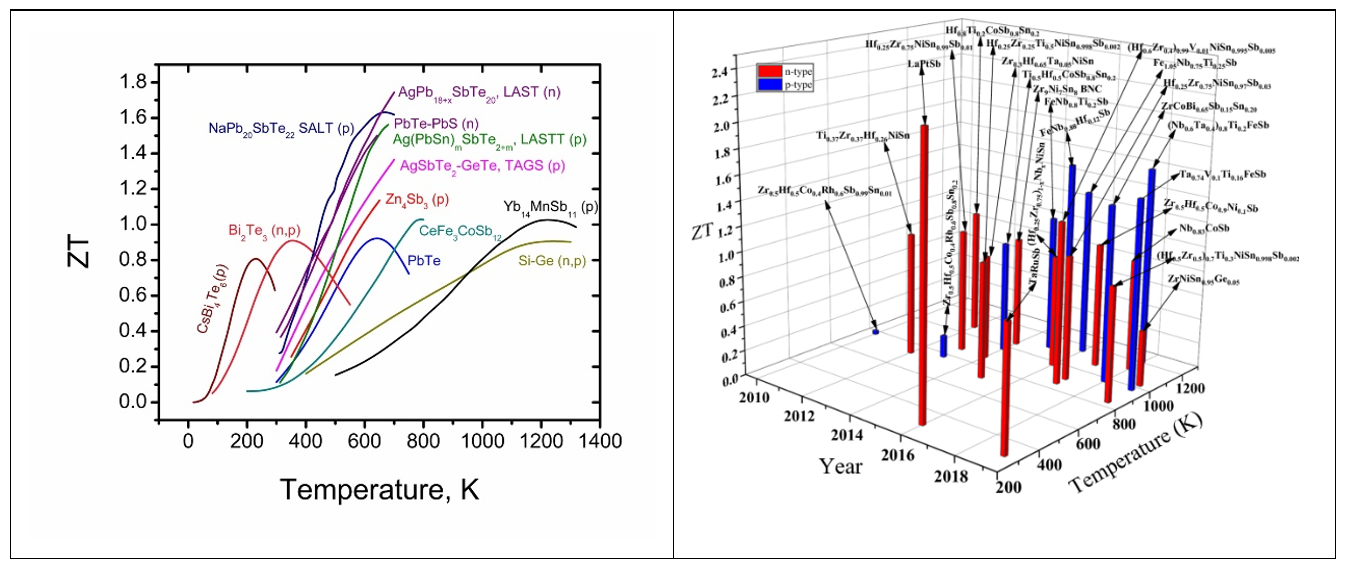
The Mg₃Bi₂-based thermoelectric materials have been an important breakthrough direction in recent years. Researchers have developed dual-stage thermoelectric cooling devices based on n-type Mg₃(Sb, Bi)₂ and p-type (Bi, Sb)₂Te₃. At a heat end temperature of 350K, they achieved a maximum cooling temperature difference of approximately 103.2K, comparable to the performance of commercial Bi₂Te₃ devices. Simulation predictions show that a seven-stage device can achieve a maximum cooling temperature difference of 110K at a heat end temperature of 300K. Moreover, the Mg₃Bi₂-based alloy not only has excellent thermoelectric properties but also possesses outstanding mechanical properties and lower raw material costs.
In addition, there is continuous optimization of the BiSb alloy. By incorporating Fe₃O₄ nanoparticles into the Bi₈₀Sb₂₀ alloy, researchers achieved approximately 100% performance improvement in deep-temperature thermoelectricity. The proposal of the ideal solid solution coarse-grain paradigm also provides a new idea for promoting BiSb alloys to achieve deep-temperature refrigeration across temperature ranges.
2. Deep Integration of Artificial Intelligence
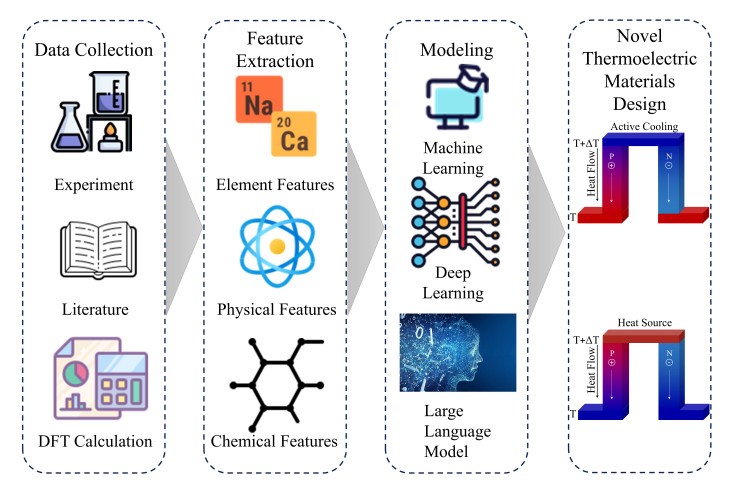
Relevant studies indicate that integrating artificial intelligence deeply into various aspects of thermoelectric cooling technology, such as materials, structures, devices, applications, and control systems, as well as the overall system optimization, is a highly promising development direction in the future. Machine learning methods have been applied to predict device performance, guide device design, and optimize control strategies.
3. Multi-path Fusion of Low-Temperature Solid-State Refrigeration
With the rise of quantum technology and the increasing shortage of helium resources, new and highly efficient principles and technologies for low-temperature solid-state refrigeration have become a highly focused research area. The integration of thermoelectric, magnetic card, electric card, and multi-card effects, as well as the utilization of degree-of-freedom coupling and quantum fluctuation effects in quantum materials, are opening up the development path of a new generation of solid-state refrigeration.
Thermoelectric cooling cannot replace liquid helium (at 4K) or dilution refrigerators (at mK level) in achieving extreme low temperatures, but it can perfectly fit the intermediate temperature range of 130~200K. When compressor refrigeration encounters bottlenecks and liquid nitrogen equipment is limited by volume, thermoelectric cooling stands out with its advantages of solid-state vibration-free, miniaturized integration, and precise temperature control. In the future, it will continue to play a significant role in cutting-edge fields such as infrared detection, space research, quantum computing, and biomedicine, and will have a huge application value.