


Higher Computing Power, Tighter Space: How to Solve the Thermal Dilemma of Humanoid Robots
With the implementation of AI large‑models and high‑performance servo systems, humanoid robots have achieved substantial improvements in intelligent perception and motion‑control performance. Yet alongside technological iteration come new challenges: higher computing power and more complex executive actions lead to greater heat buildup in core components. Heat accumulation gives rise to numerous hidden risks, making thermal dissipation a critical factor determining whether robots can operate stably under high loads for extended periods.
I. Root Causes of Heat Generation in Robots
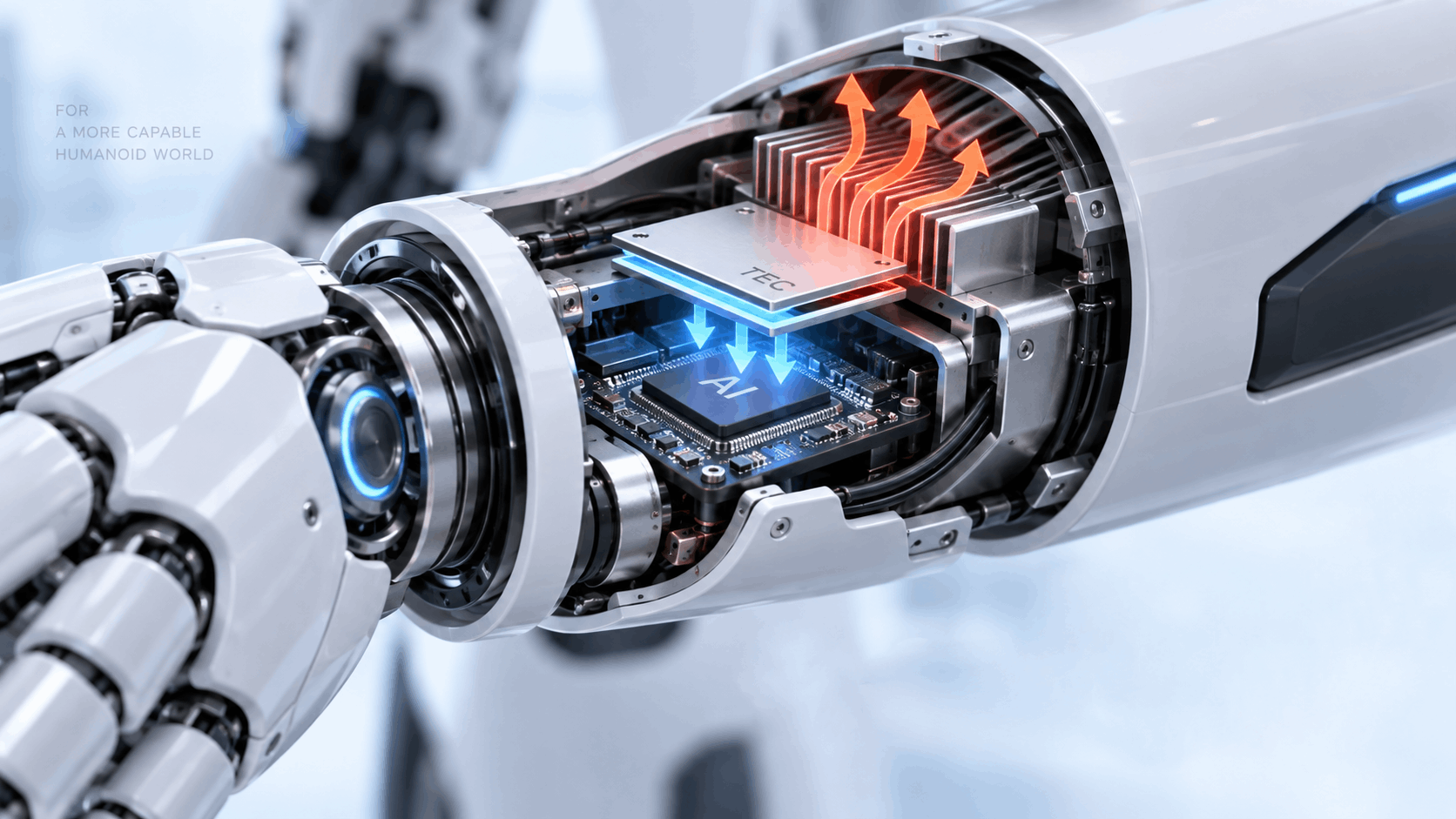
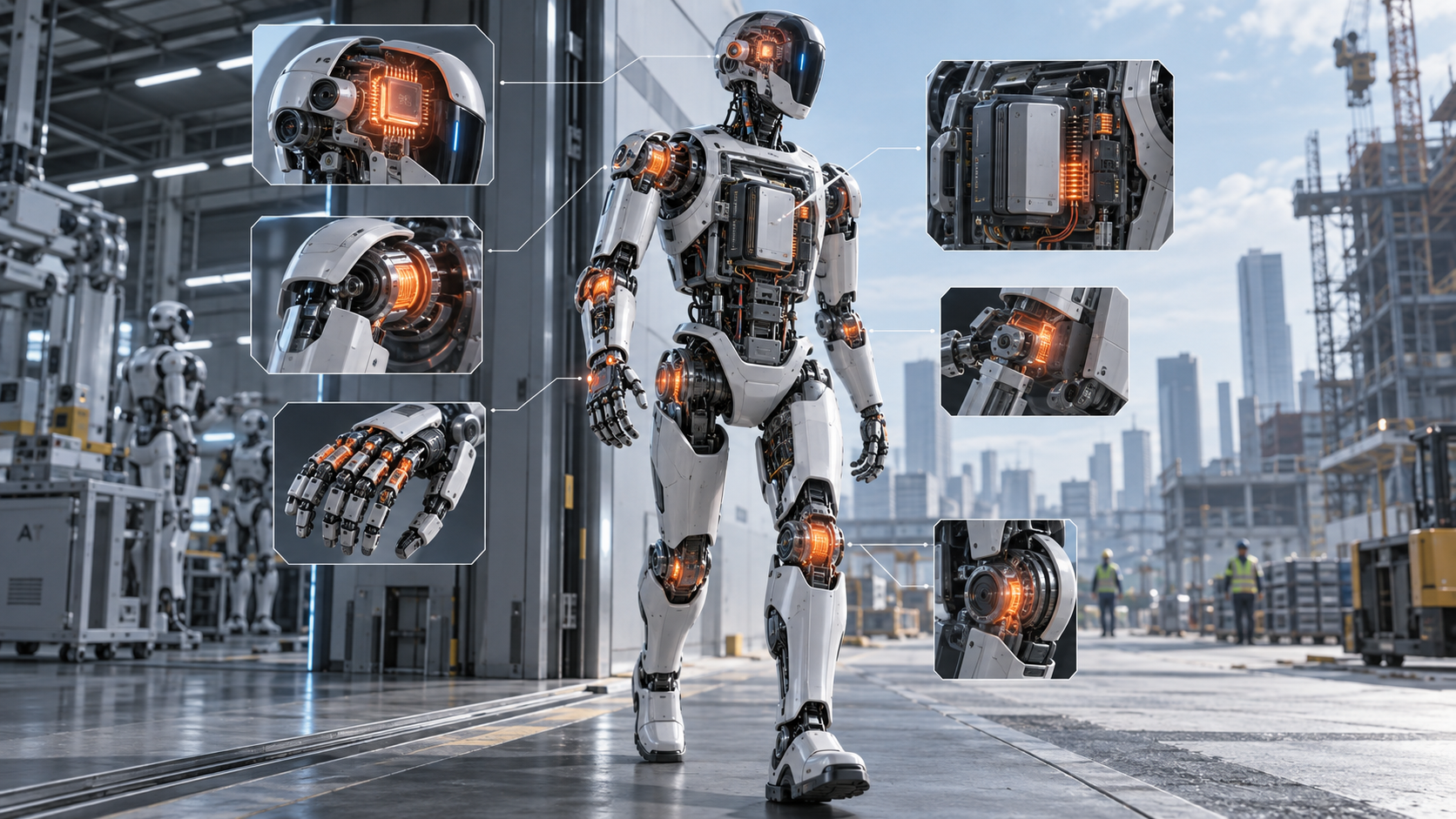
Humanoid robots must integrate high‑power servo motors, driver chips, batteries, sensors and AI computing units within their bodies. However, joint cavities often occupy merely several cubic centimeters, while mounting clearances at wrists and fingers can be less than 2 mm. Within such compact structures, conventional air cooling, heat pipes and liquid‑cooling pipelines are difficult to deploy.
Meanwhile, the computing‑power threshold for robots keeps rising. As high‑compute modules are packed into ever‑smaller volumes, the heat‑flux density of local hot spots increases. For humanoid robots with stringent real‑time requirements, overheating does more than shorten component service life: AI chips undergo frequency throttling, visual‑processing latency rises, motion‑control precision degrades, driver chips may trigger over‑temperature protection, and thermal drift occurs in LiDAR and force‑torque sensors.
It follows that the stable delivery of a humanoid robot’s intelligence and motion capabilities ultimately hinges on a reliable thermal‑management solution.
II. Working Principle and Advantages of TEC
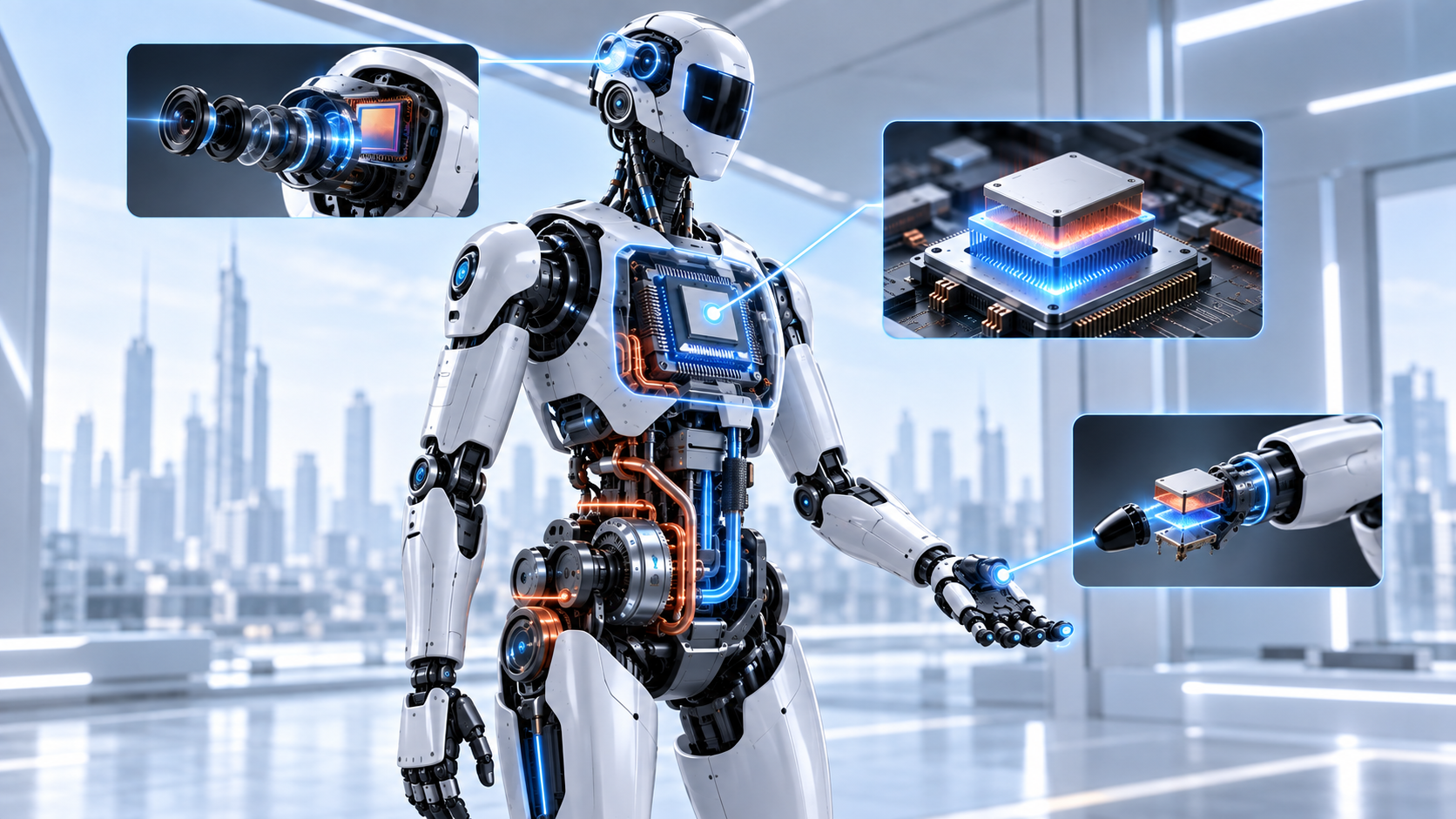
Based on the Peltier effect, TEC (Thermoelectric Cooler) achieves cooling or heating via current regulation. Unlike traditional heat‑dissipation approaches, a TEC actively transfers heat from one side to the other; reversing the current direction enables bidirectional switching between cooling and heating, making it suitable for robot scenarios featuring low‑to‑moderate power demands, high‑precision temperature control and space constraints.
- High temperature‑control accuracy to mitigate component parameter drift TEC delivers temperature‑control precision up to ±0.1 °C for temperature‑sensitive components. Once thermal equilibrium is reached, wavelength shift, dark‑current variation, zero‑point drift and fluctuations in inference latency are effectively suppressed.
- Ultra‑thin and compact for installation in confined spaces Ultra‑thin TEC units are 2‑3 mm thick and can be directly bonded onto driver boards, miniature motors, laser emitters and chip surfaces. For constrained locations such as robot joints, wrists and heads with no air ducts or piping, TEC offers distinct structural merits.
- Vibration‑free and refrigerant‑free for highly integrated systems Featuring no compressors or moving mechanical parts, TEC operates with minimal vibration and low noise, avoiding interference with high‑precision sensors. Requiring no refrigerant and posing zero leakage risk, it fits highly‑integrated, high‑reliability robot systems.
- Fast response for suppressing transient hot spots Local temperatures may surge when robots bear sudden loads, swing arms rapidly or run high‑load inference tasks. TEC adjusts cooling and heating output within seconds to curb peak temperatures and reduce the risk of chip frequency throttling.
III. TEC Applications in Robotics
AI Chips: Responsible for visual processing, path planning, posture estimation and motion control, AI chips serve as the core computing backbone of robots and are prone to localized overheating. Upon detecting temperature rises, the TEC actively transfers heat from the chip side to the heat‑rejection side, keeping the chip within its stable operating‑temperature window.
Optical and Sensing Modules: Depth cameras, infrared ranging units and LiDAR form the robot’s core environmental‑perception hardware. These devices generate self‑heat during operation and are highly temperature‑sensitive. TEC enables precise and stable temperature regulation to sustain consistent device performance.
Cutting‑edge Use Cases: As technology evolves, TEC is being adopted in innovative applications. For instance, TECs integrated with temperature sensors in robot fingertips perform active heating and cooling. By analyzing thermal variations upon contact, the robot can identify different materials, liquids and object states.
In summary, greater robot intelligence raises requirements for real‑time computation, environmental perception and motion control. Reliable performance of these three capabilities is built upon controllable operating temperatures. While TEC cannot resolve every thermal challenge facing robots, it represents one of the key technologies for achieving thermal equilibrium in humanoid robots and embodied‑intelligence systems.