


3 Simple Test Methods to Quickly Select High-Quality Thermoelectric Coolers (TEC)
Most customers who have used thermoelectric coolers (TECs) have encountered this problem: two TECs with nearly identical appearance, dimensions and model numbers can deliver drastically different cooling performance once installed. One operates with stable cooling capacity, while the other suffers from weak cooling, temperature control drift, continuous performance degradation and premature failure. These issues eventually lead to equipment rework, project delays and substantial hidden costs.
To prevent such problems, you need to properly distinguish TEC quality. Focus on these three key checks:
- Visual Inspection: Check substrate flatness to reject defective units;
- Internal Resistance Measurement: Detect cold solder joints and material defects to ensure batch consistency;
- Performance Test: Verify cooling capacity and avoid falsely labeled specifications.
1. Visual Inspection of Substrate Flatness
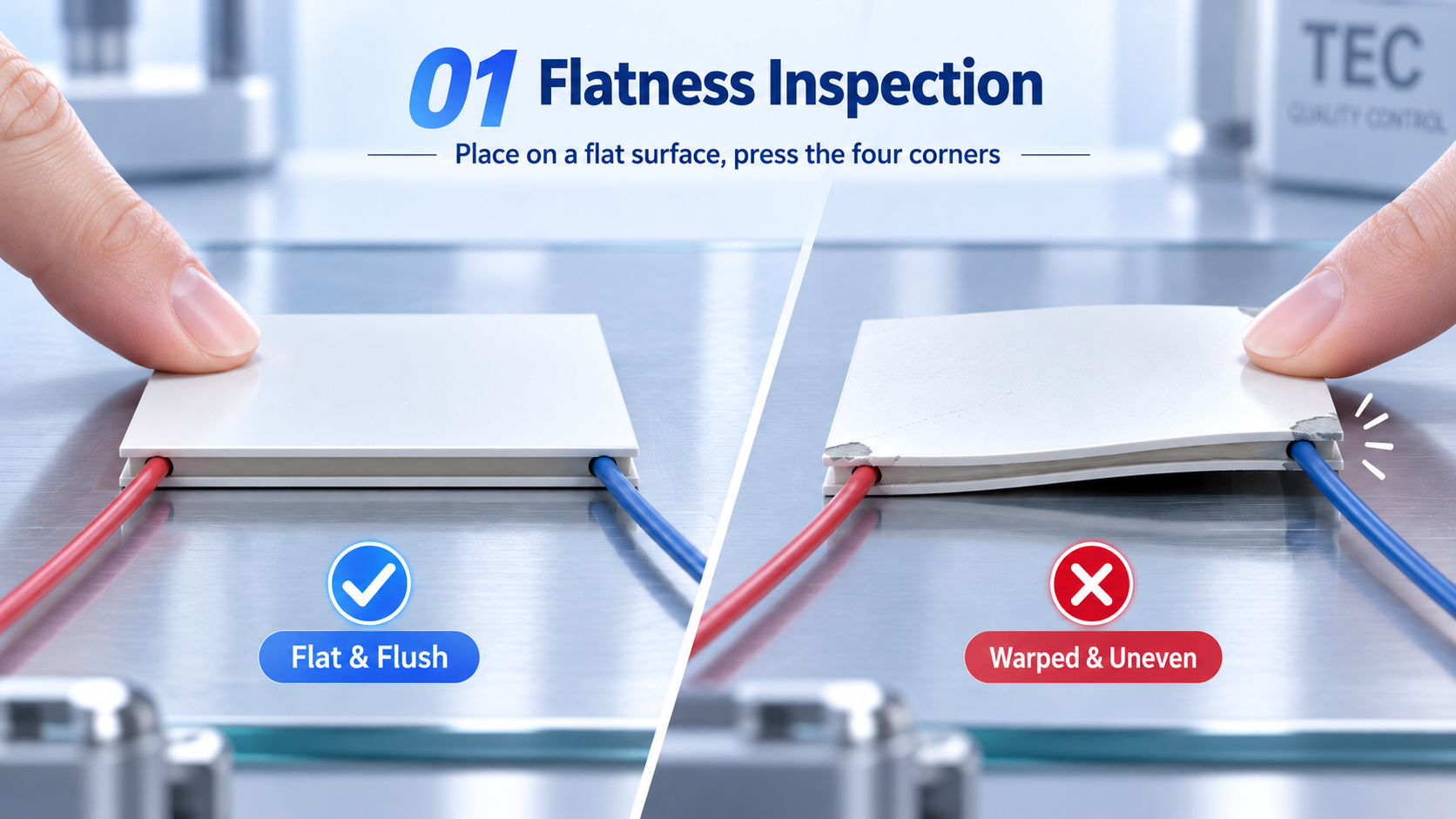
Substrate flatness is the most intuitive indicator of TEC manufacturing quality and the first quality checkpoint. If the substrate is uneven or the parallelism between top and bottom substrates deviates greatly, the thermal contact resistance will rise sharply after assembly. Even if the TEC core performs well, poor heat dissipation, reduced cooling efficiency and localized heat buildup will occur, accelerating TEC aging during long-term operation. Therefore, directly discard any TEC with substandard appearance and workmanship.
Test Method: Place the TEC flat on a glass or metal flat bench, observe at eye level, and gently press the four corners.
Characteristics of defective units: Warped or uneven ceramic substrates; corners lift or wobble when pressed. Some products also have scratches, chipped edges, uneven sealing glue, rough or blackened surfaces and other workmanship defects.
Characteristics of qualified units: Smooth and flat substrates, four corners fully attached to the bench without warpage or deformation, uniform and neat overall workmanship.
2. Room-Temperature Internal Resistance Test
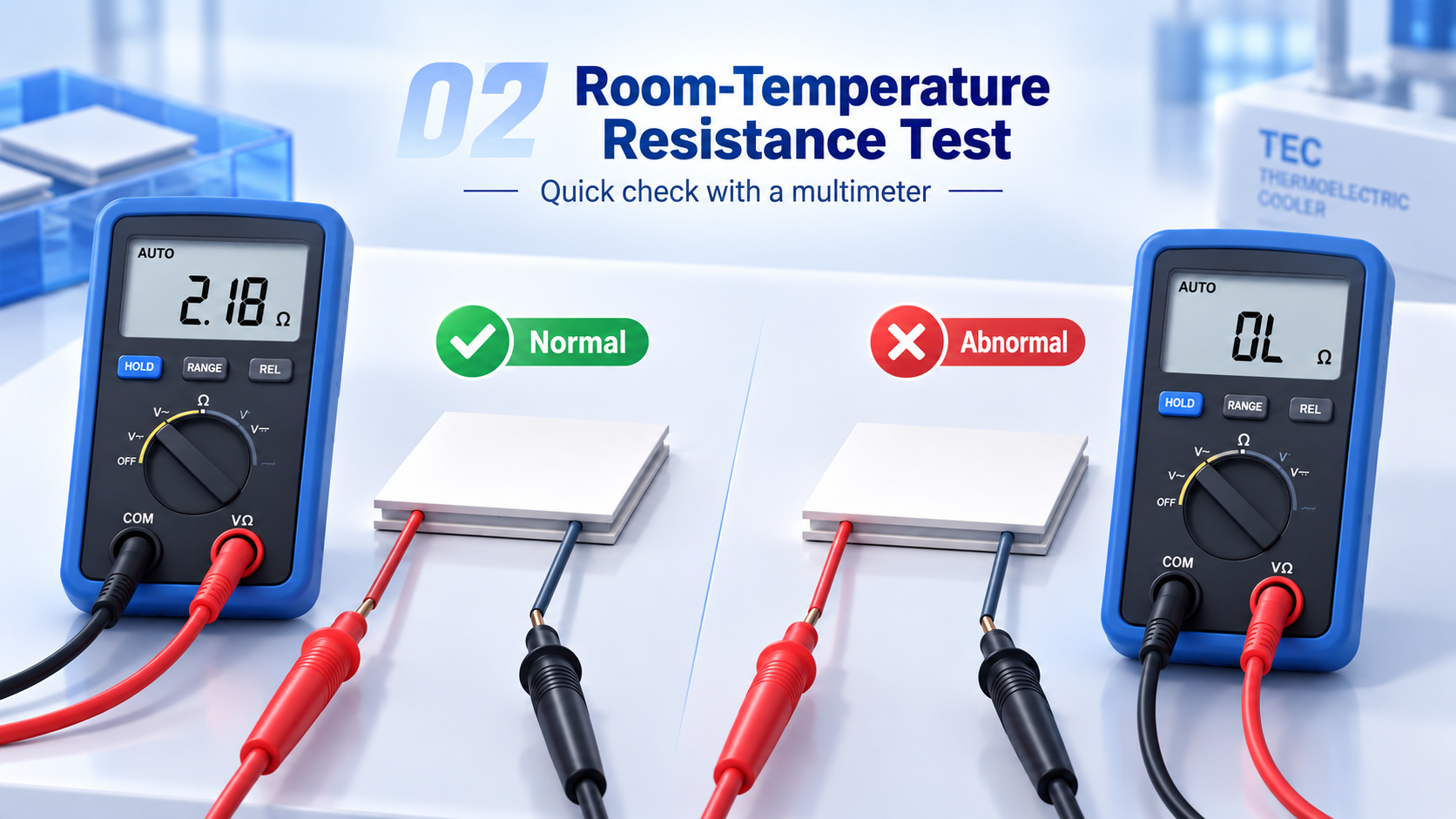
Many low-cost TECs look intact externally but still have internal cold solder joints or unevenly mixed thermoelectric materials. Abnormal internal resistance indicates inherent product quality defects. Do not purchase such products in bulk, no matter how low the price is.
Test Method: At ambient temperature, measure the internal resistance between the TEC positive and negative terminals with a multimeter in resistance mode, and compare readings against the standard range listed in the datasheet.
Characteristics of defective units:
- Higher-than-standard internal resistance, usually caused by cold solder joints and poor internal contact;
- Lower-than-standard internal resistance, generally resulting from downgraded thermoelectric materials and low-quality pellets, with falsely advertised temperature difference;
- Wide resistance variation within the same batch, meaning poor batch consistency.
Characteristics of qualified units: Internal resistance of individual TEC falls within the standard parameter range; consistent readings and stable performance across the batch.
3. Hot & Cold Surface Temperature Measurement
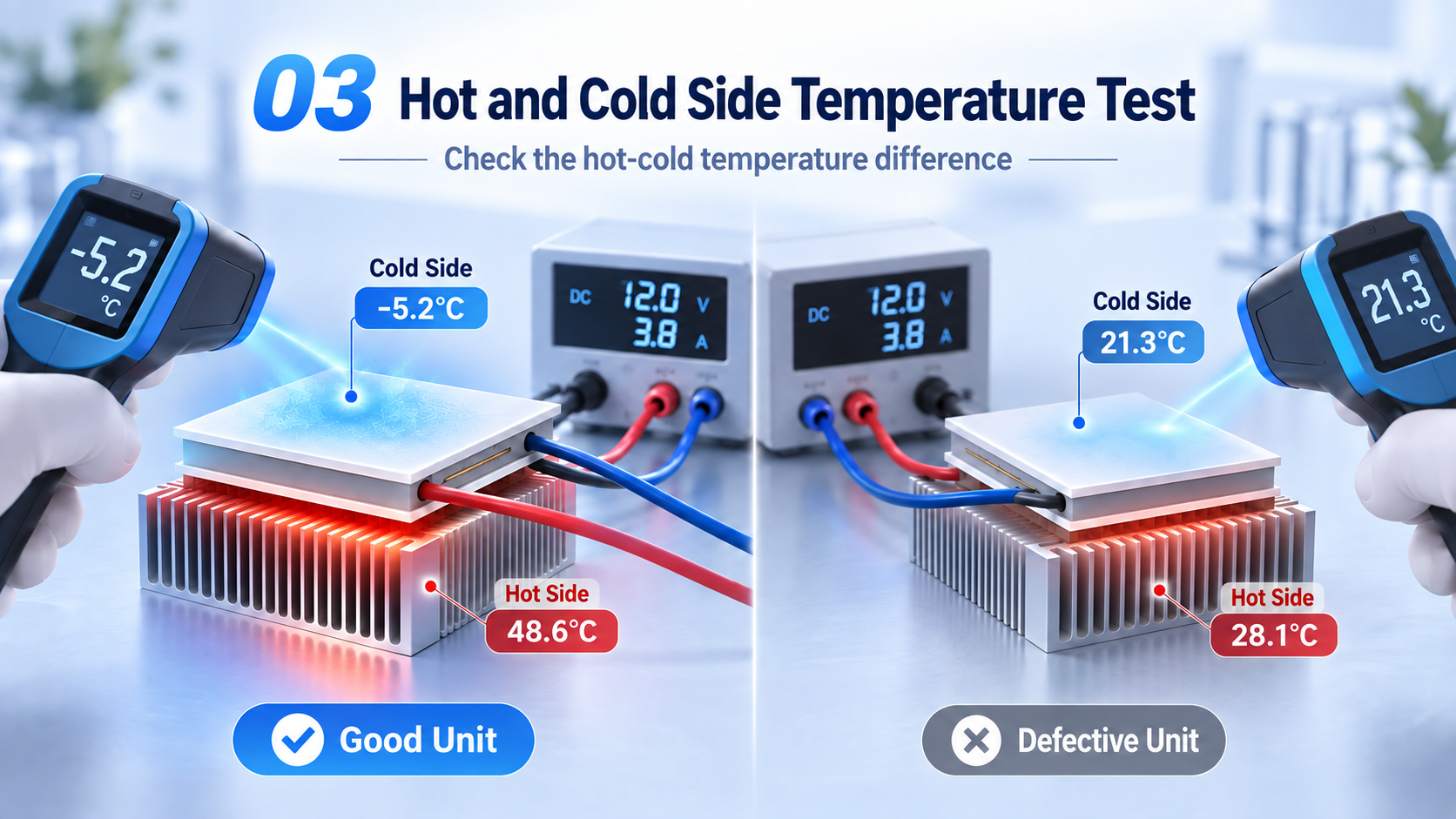
A TEC that passes visual and resistance checks is not guaranteed stable operation after installation. To avoid products with inflated specifications, powered testing is the most straightforward method. Datasheet parameters can be exaggerated, but actual measured cooling performance cannot be falsified.
Test Method: Power the TEC at the recommended voltage from the datasheet with basic heat dissipation. Run for 30 seconds to 1 minute, then measure temperatures of the cold and hot sides separately with a thermometer.
Characteristics of defective units: Slow cooling on the cold side, small temperature difference between hot and cold sides; the hot side heats up rapidly with poor cooling effect, high power consumption and low efficiency; obvious temperature fluctuations during short operation and unstable working conditions.
Characteristics of qualified units: Rapid temperature drop after power-on, large temperature difference between hot and cold sides, stable temperature operation. Actual performance matches rated specifications without abnormal overheating.
FerroTec First Thermoelectric has specialized in thermoelectric cooling for 34 years. We strictly control TEC quality throughout the whole process, from thermoelectric material formulation and precision soldering to high-precision substrate assembly and full reliability testing.
If you encounter any challenges in TEC selection, incoming inspection or quality control, please contact us at 13575452327.