


Aerial Temperature Control Experts: The Application of Thermoelectric Refrigeration Technology in Drones
Professional drones often need to operate in harsh environments with high temperatures, high humidity, high altitudes, and sandstorms—whether inspecting high-voltage power grids or conducting nighttime reconnaissance, they place extremely high demands on the stability of their onboard electronic systems. So how do these precision electronic components overcome harsh environments and maintain stable operation? The answer lies in this key temperature control technology—thermoelectric cooling (TEC).
I.What is thermoelectric refrigeration technology?
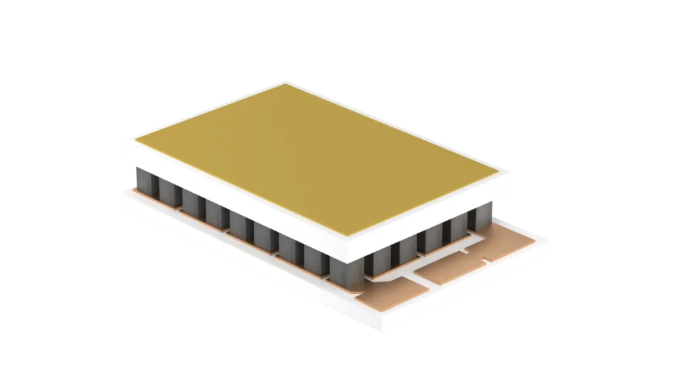
Imagine this: you have a small cooling plate in your hand. As soon as you connect it to a power source, one side immediately cools down, while the other side starts to heat up.
This principle was discovered as early as 1834 by the French physicist Jean Charles Peltier and named the Peltier effect: when direct current passes through a thermocouple composed of N-type and P-type thermoelectric materials, electrons carry heat from one end to the other. As a result, one side absorbs heat and becomes cooler, while the other side releases heat and becomes warmer. Multiple thermocouples connected in series and packaged together form a thermoelectric cooler module —and this compact and efficient temperature control device is the key to achieving active temperature control and stable operation of the electronic components inside drones.
II.Application of Thermoelectric Refrigeration Technology in Unmanned Aerial Vehicles
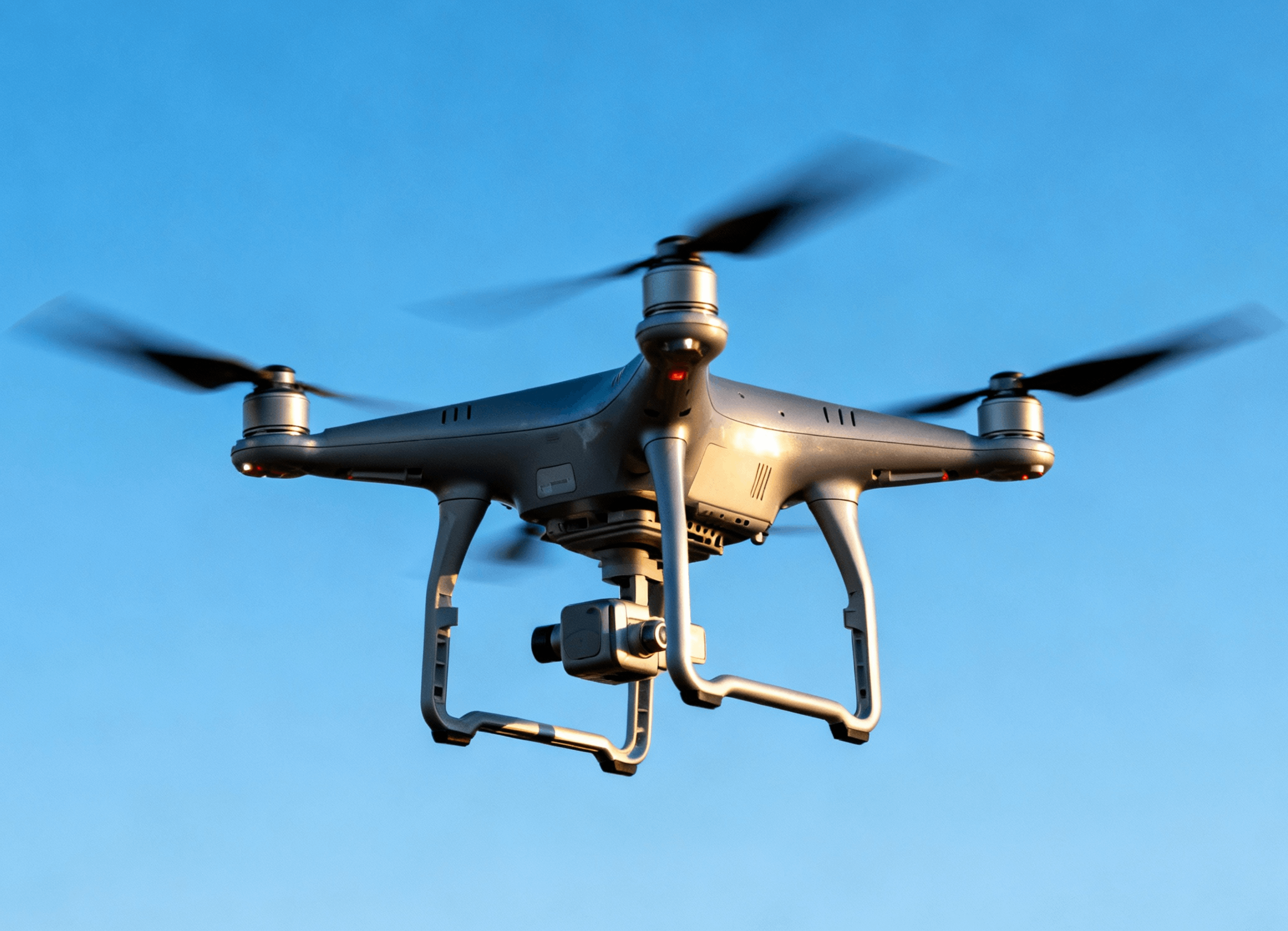
Modern professional drones are no longer simple "flying cameras." They integrate multiple subsystems, including infrared thermal imaging, high-performance lithium batteries, flight control, and communication. The core electronic components in these systems are extremely sensitive to temperature changes—even slight deviations can affect mission success or failure and jeopardize flight safety. Therefore, thermoelectric cooling technology is urgently needed for temperature control.
1.Infrared thermal imaging system
Tasks such as power line inspection, forest fire prevention, and building inspection rely on infrared cameras. These sensors must operate at a constant low temperature (-10℃ to +10℃), otherwise the thermal noise they emit will severely interfere with image quality.
☑️Solution : Integrate a miniature TEC module at the back end of the infrared detector. The cold end is in close contact with the sensor to achieve precise temperature control. The hot end is connected to an embedded vapor chamber or copper heat sink base through high thermal conductivity silicone grease, forming a thermal path with the drone's metal shell. Heat is dissipated into the environment through convection and radiation on the surface of the drone.
2.Lithium battery pack
In drones, the optimal operating temperature for lithium batteries is between 15 and 35°C. Temperatures exceeding 45°C accelerate aging; further increases, exceeding 60°C, may trigger thermal runaway or even fire. When drones are engaged in outdoor flights during summer or high-load climbs, battery temperatures can easily spike.
☑️Solution : Deploy TEC (Transmission Control Unit) in the high-temperature area of the battery module. The cold end absorbs localized heat, while the hot end uses thermal pads or heat pipe arrays to quickly conduct waste heat to dedicated heat dissipation fins on the bottom or side walls of the drone. During high-load flight, airflow over the fuselage can carry away heat; in hovering scenarios, passive radiative heat dissipation is achieved through a large-area metal shell to prevent heat accumulation inside the cabin.
3.Flight control and communication module
Flight control computers, GPS modules, and 5G/image transmission chips generate a lot of heat during continuous operation. Overheating can lead to problems such as loss of flight control, image transmission lag or interruption, and false triggering of automatic return-to-home.
☑️Solution : The cold end of the TEC (Technology, Temperature, and Demand) is directly attached to the surface of high heat flux density devices such as the flight control main chip and 5G RF power amplifier; the hot end is connected to structural components far from sensitive components, such as the drone's arms or tail boom, through a multi-layer graphene film or copper-aluminum composite heat sink. In compact drones with limited space, a hybrid solution of "TEC + Phase Change Material (PCM)" can also be used: the PCM first absorbs the instantaneous peak heat, and the TEC then slowly pumps the heat out, achieving dynamic thermal equilibrium.
III.Application Cases of TEC in Drones
☑️Africa 's "Sky Pharmacy"
In Rwanda and Ghana, Zipline operates hundreds of medical drones daily, delivering blood and vaccines to remote areas. The cargo hold utilizes a composite temperature control system using TEC+phase change material (PCM) to maintain the medications within a safe range of 2-8°C, even at temperatures as high as 40°C, ensuring an uninterrupted supply of vital medical resources.
☑️ China's power grid 's "airborne doctor"
The State Grid Corporation of China uses inspection drones equipped with high-precision infrared thermal imagers to identify potential temperature rise hazards in power transmission lines. To control the temperature measurement error within ±2℃, engineers designed a miniature TEC (thermostatic temperature chamber) around the detector, maintaining the sensor within its optimal temperature range and significantly improving the accuracy of fault identification.
☑️ Military reconnaissance drones
Small reconnaissance platforms such as the U.S. military's ScanEagle rely on infrared night vision systems for nighttime missions. Cooling the focal plane array to around 0°C using TEC (thermal energy transfer) can significantly reduce thermal radiation interference from the detector itself, thereby improving the signal-to-noise ratio and long-range detection capabilities.
As a leading global supplier of thermoelectric cooling devices, FerroTec provides high-performance thermoelectric cooling chips for drones, with customizable power, materials, and appearance. For product details or to obtain solutions, please contact us at 13575452327.